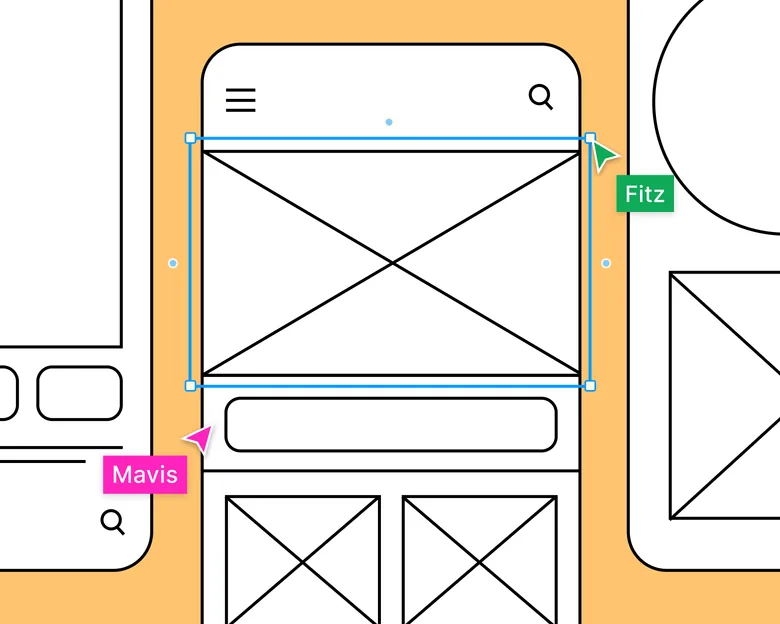
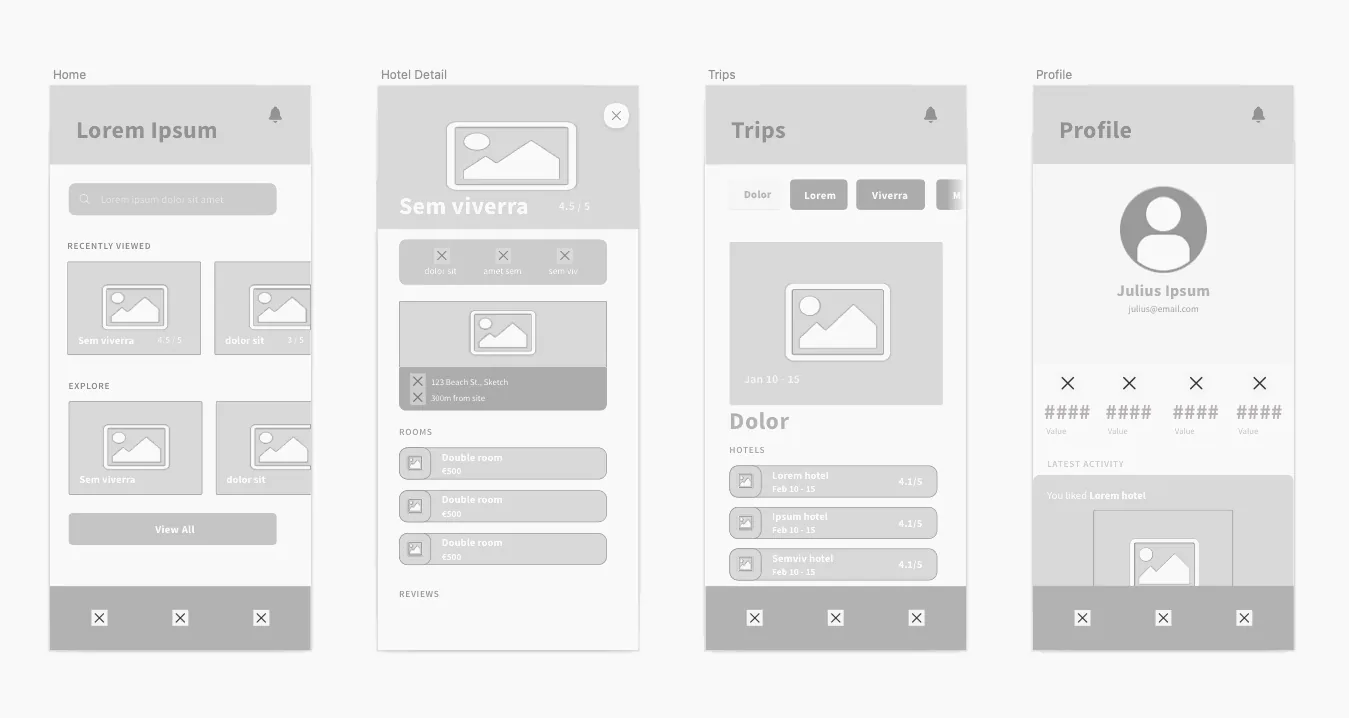
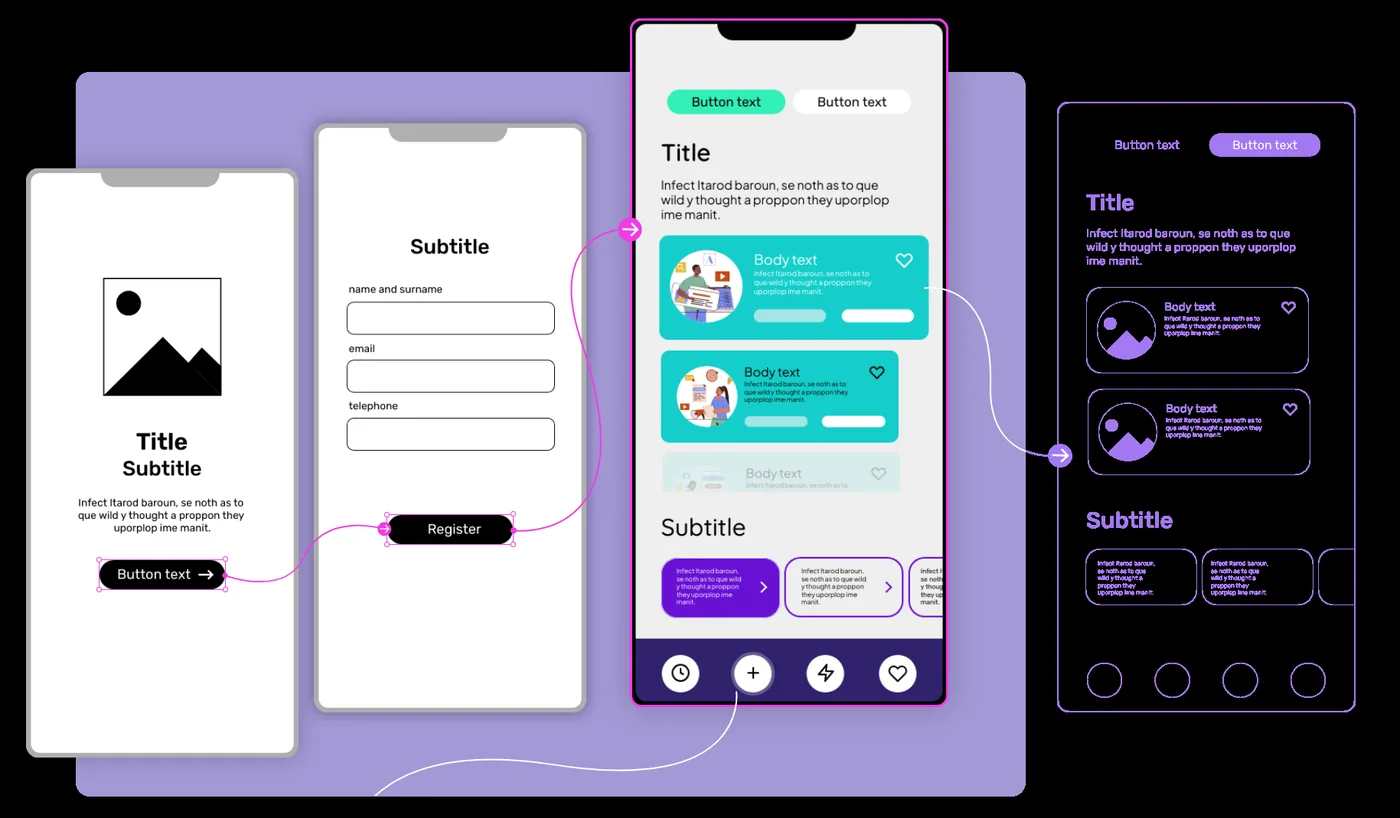
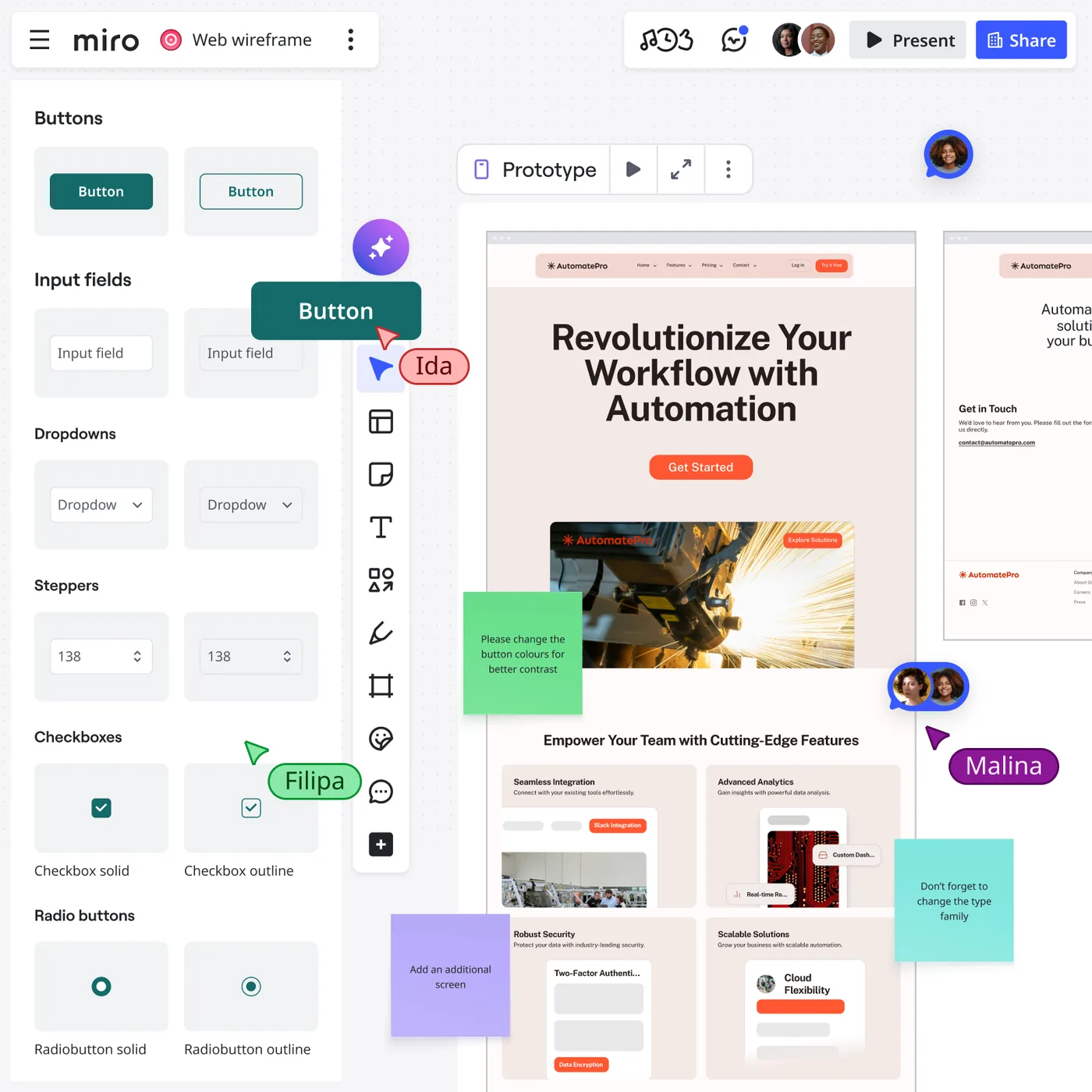
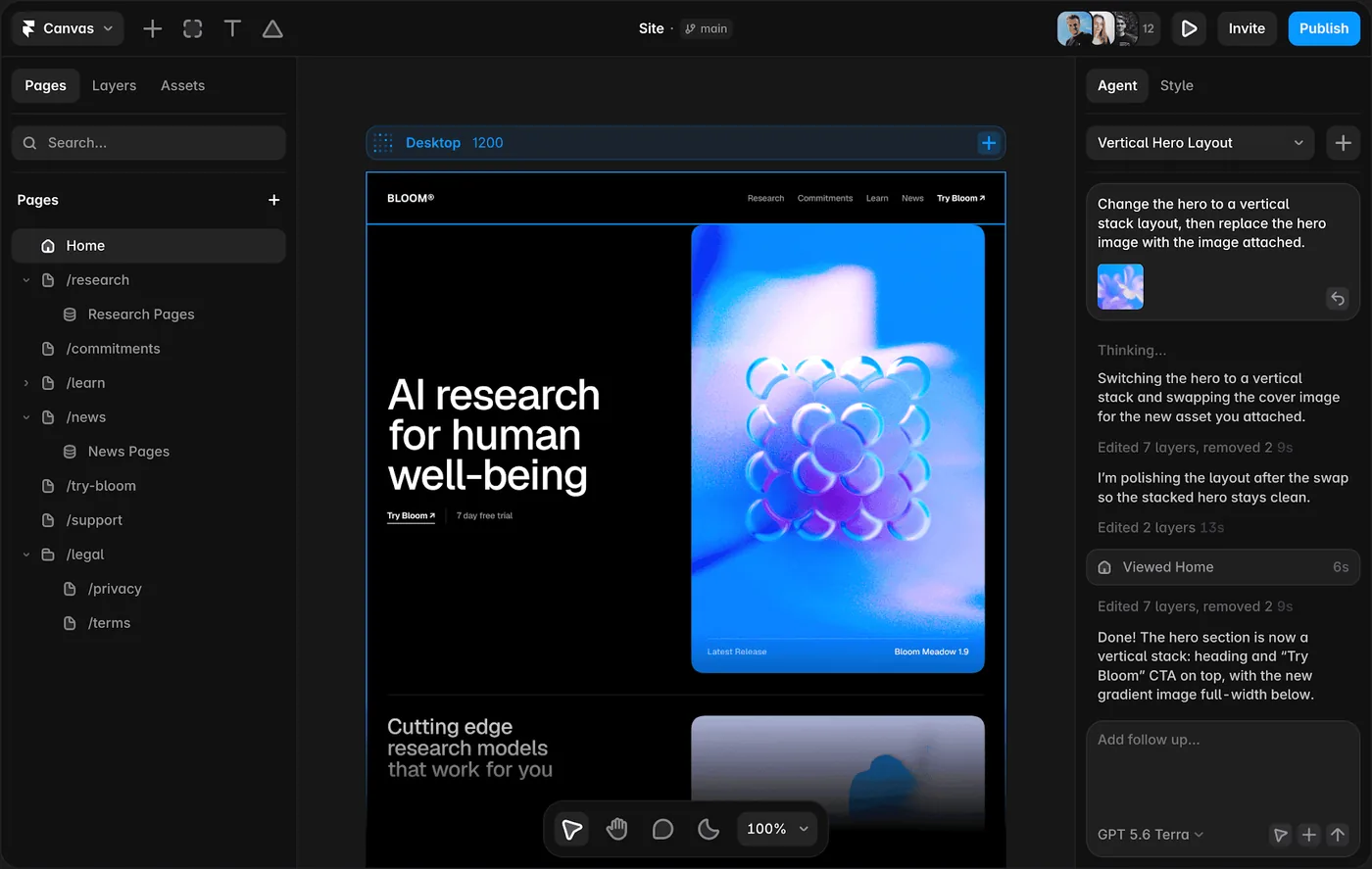
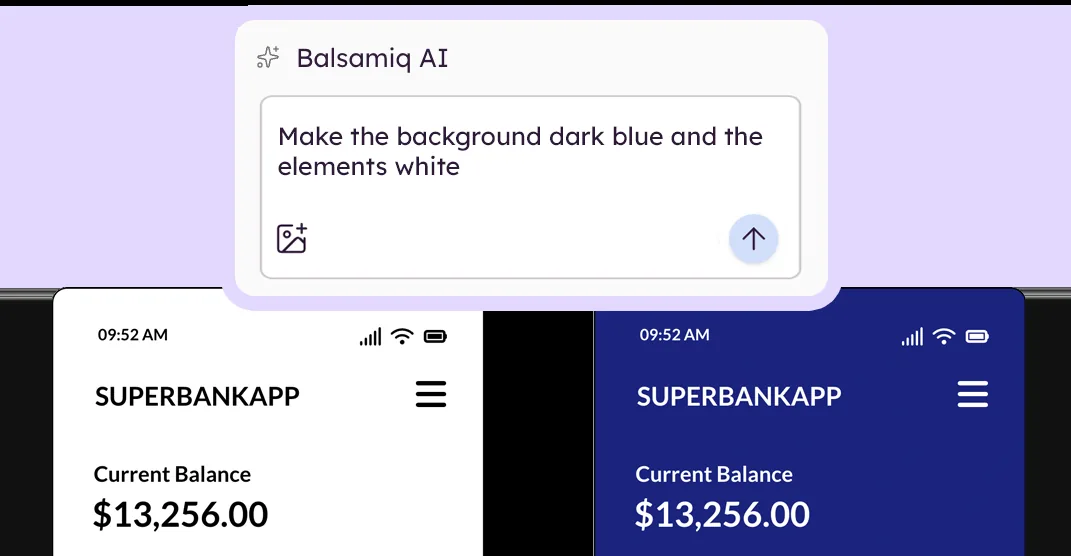
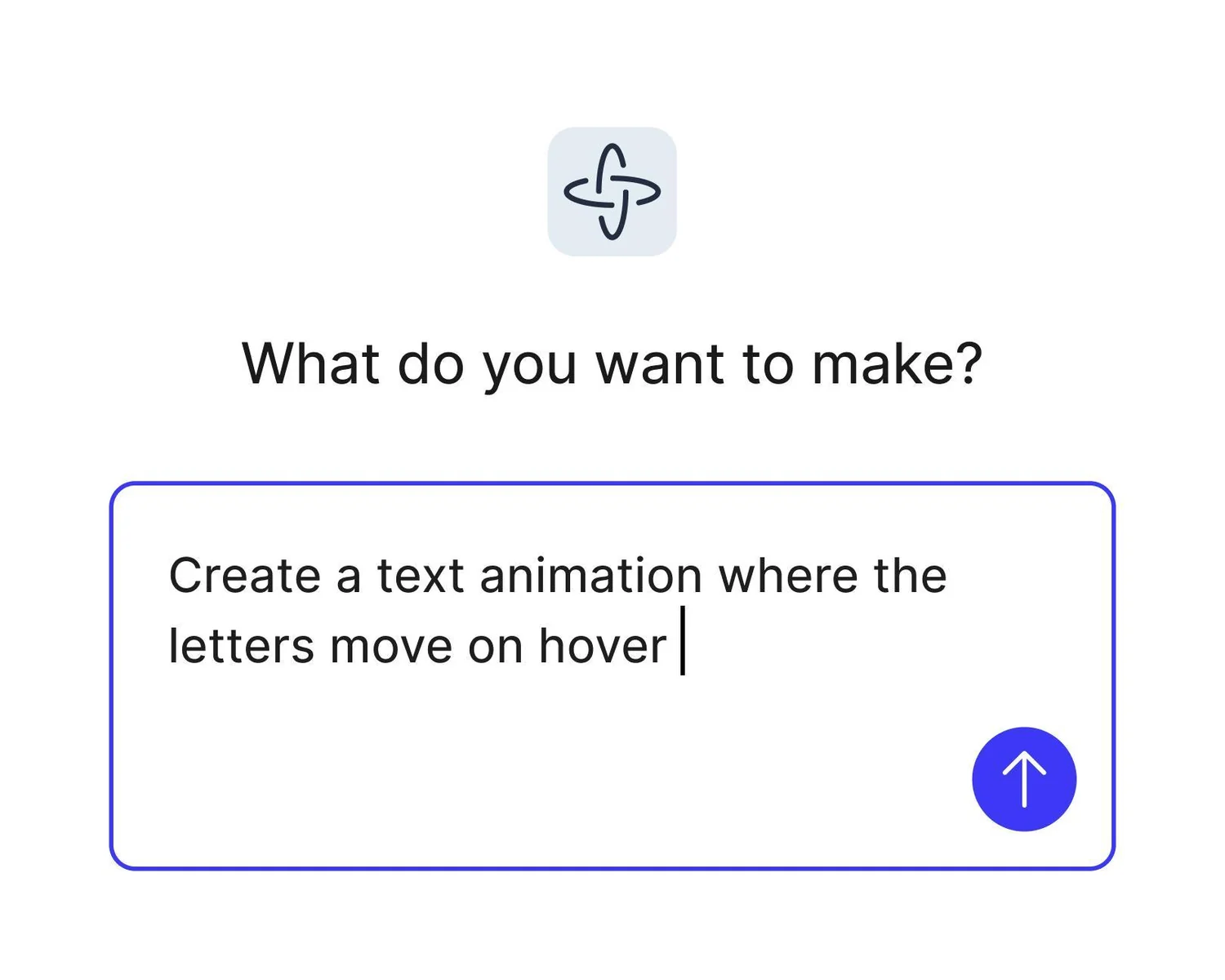
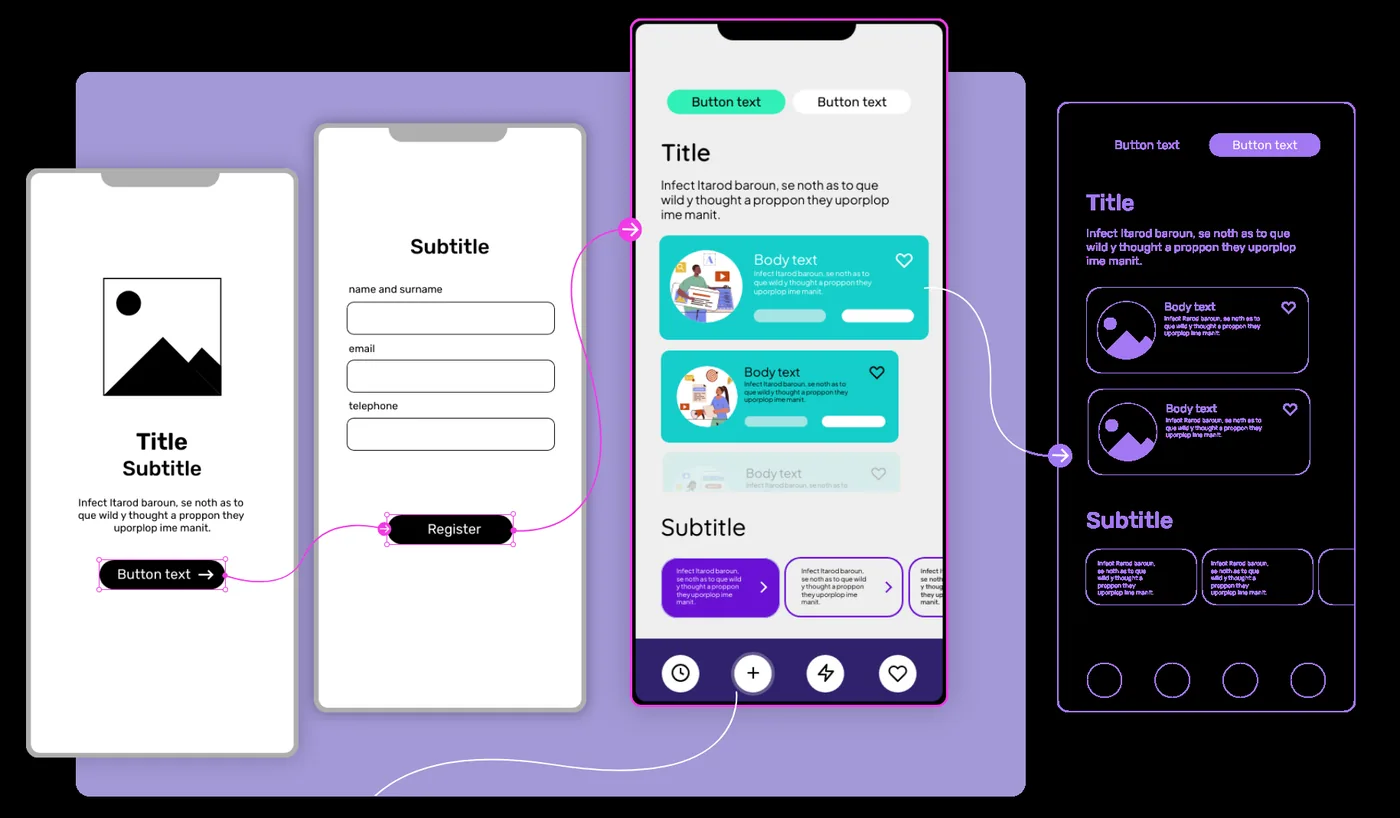
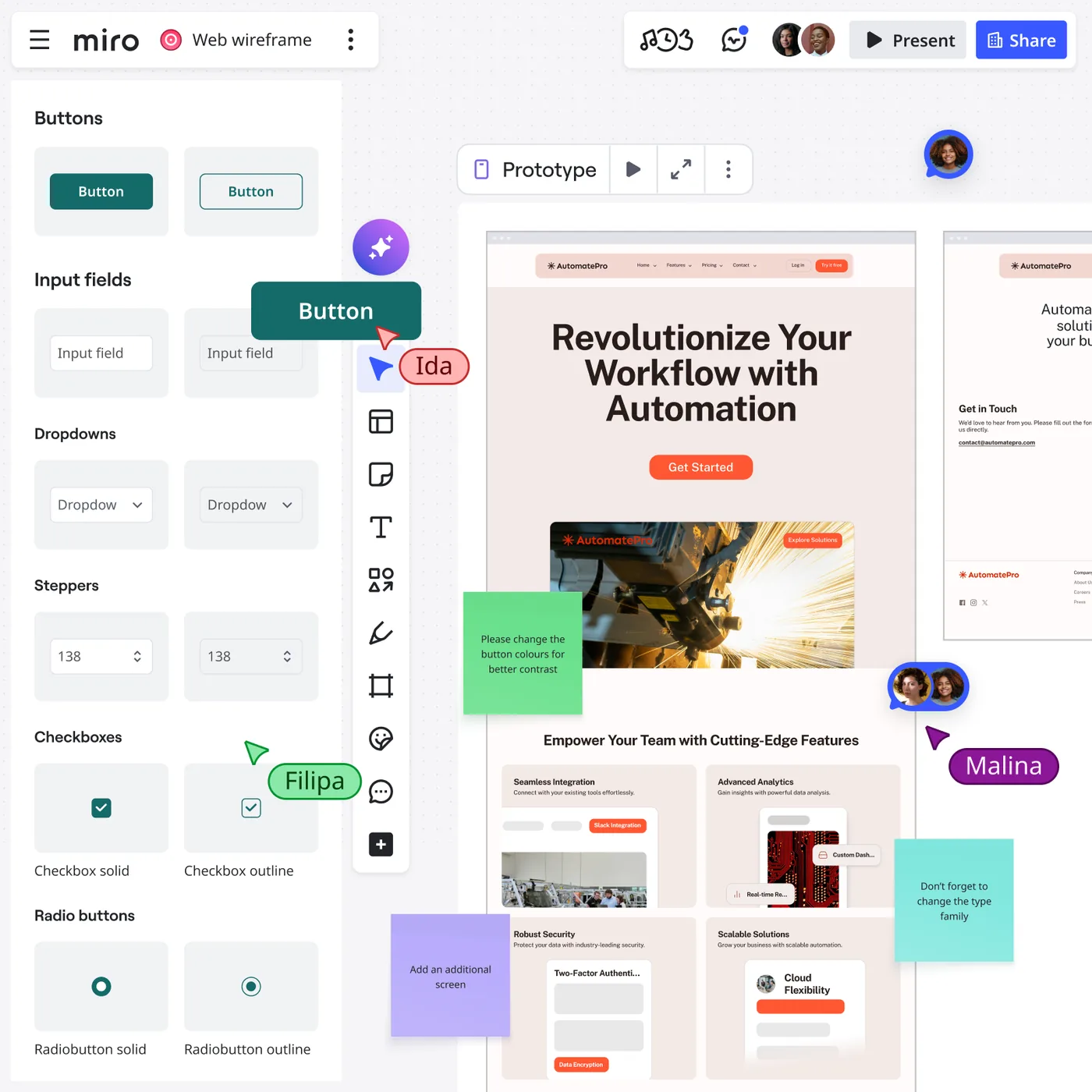
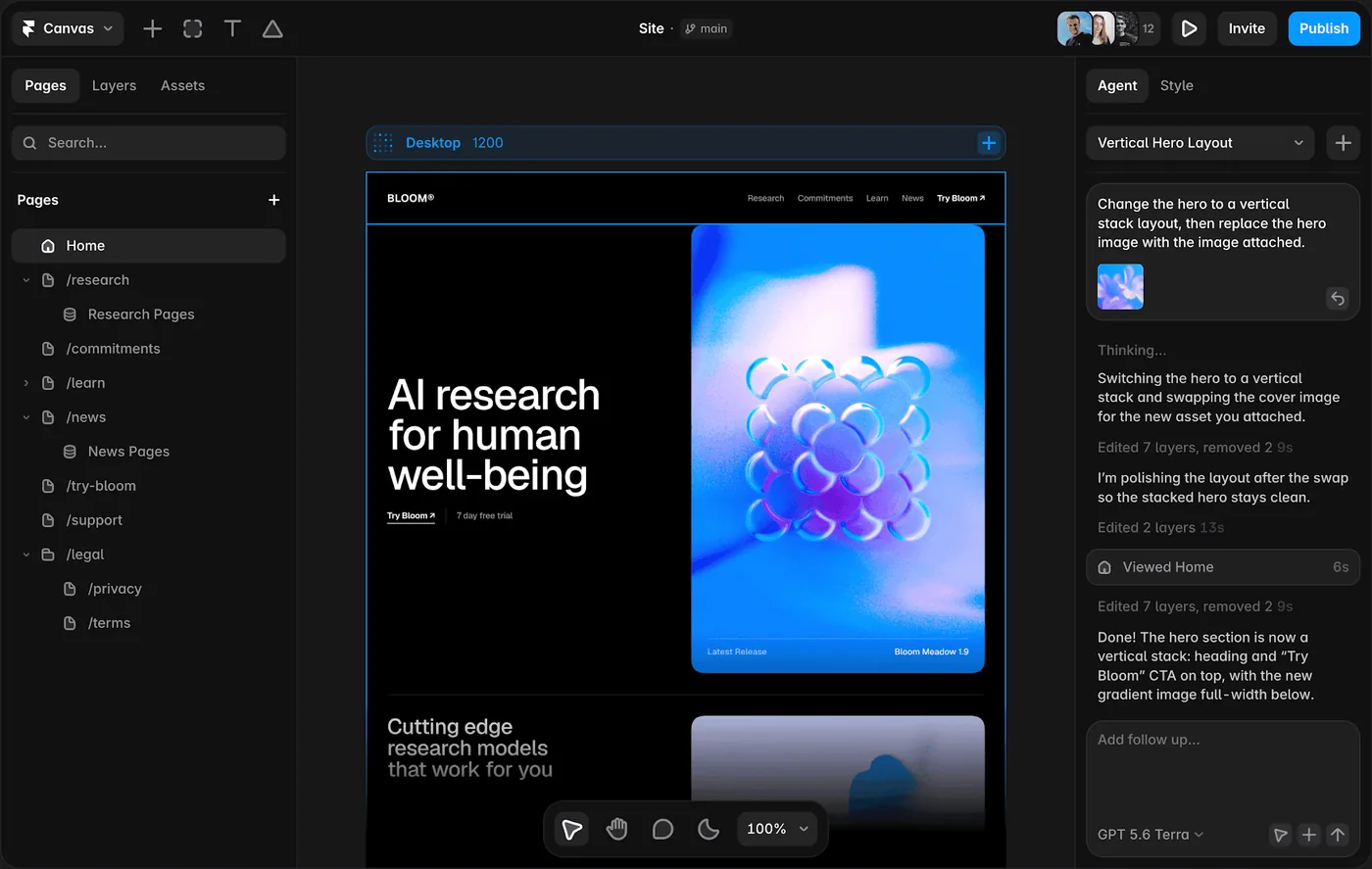
The hard part of wireframing is no longer drawing rectangles.
An AI wireframe generator can turn a prompt into screens in seconds. The useful question is what happens next. Can you edit the structure? Generate another screen without losing consistency? Switch between low and high fidelity? Share it with stakeholders? Move it into Figma? Turn it into a prototype or code?
We kept this list to six tools that have a clear place in a real product workflow.
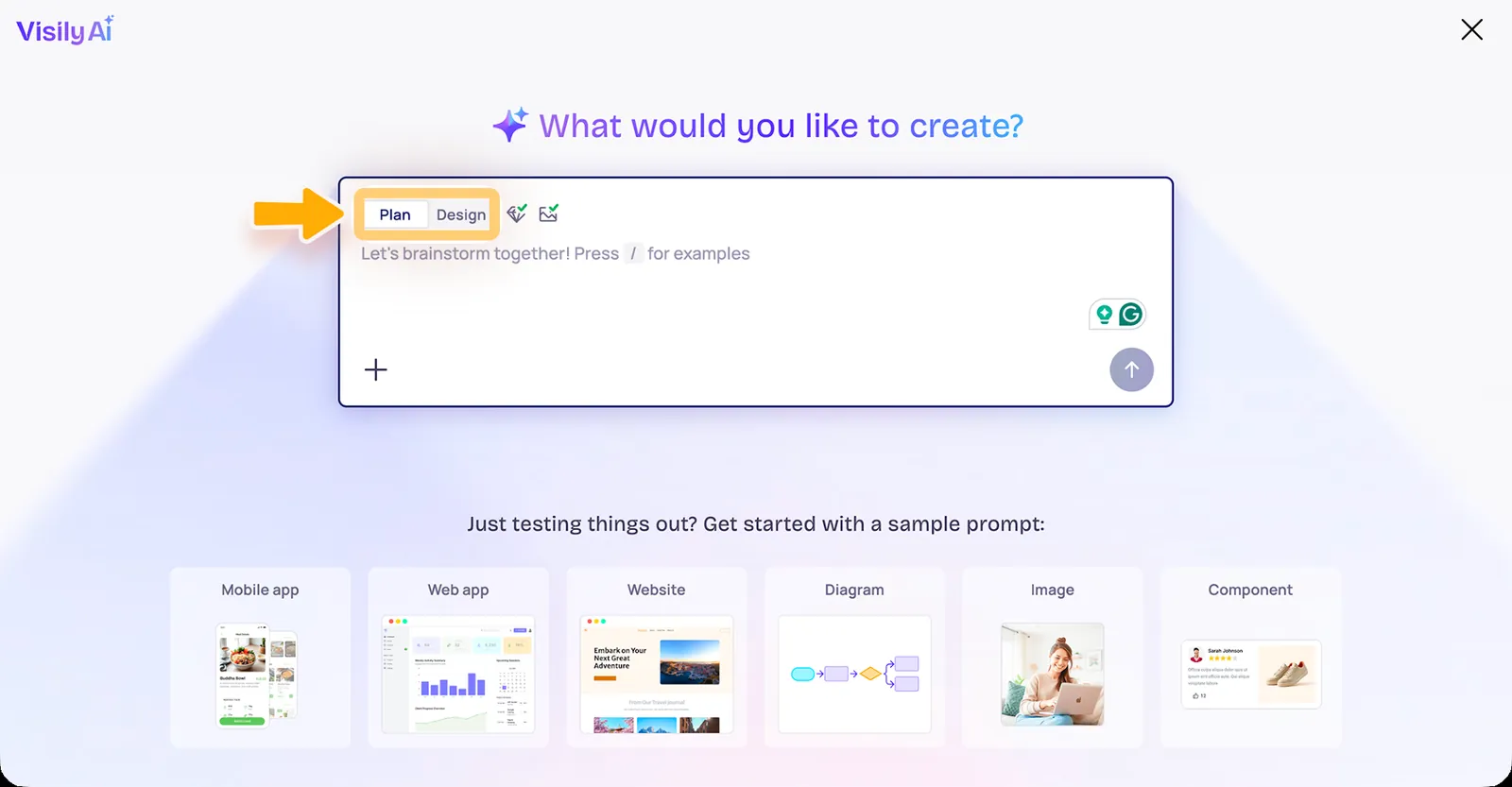
Visily — best overall AI wireframe generator for cross-functional teams
Uizard — best for beginners and fast app concepts
Relume — best AI website wireframe generator
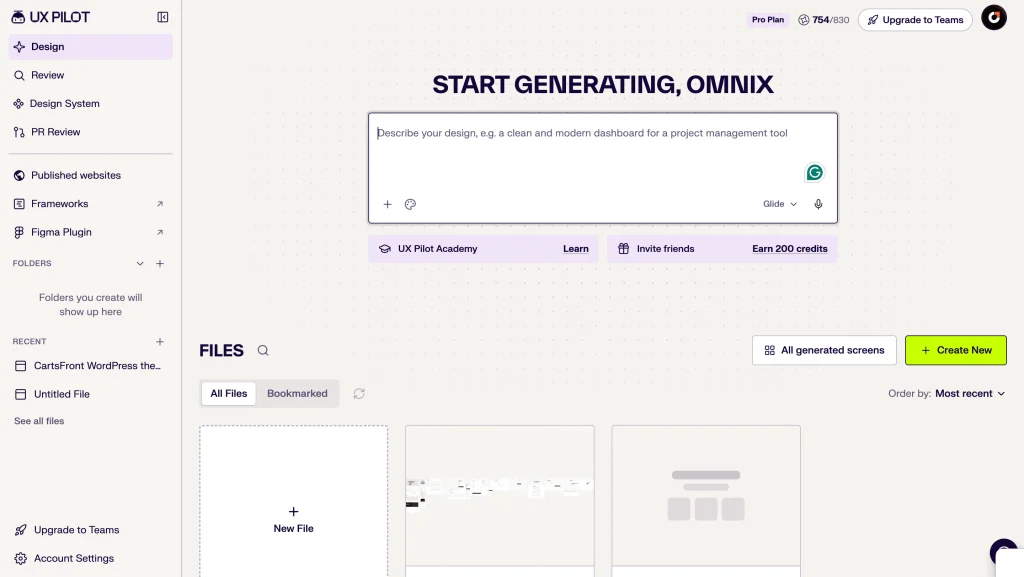
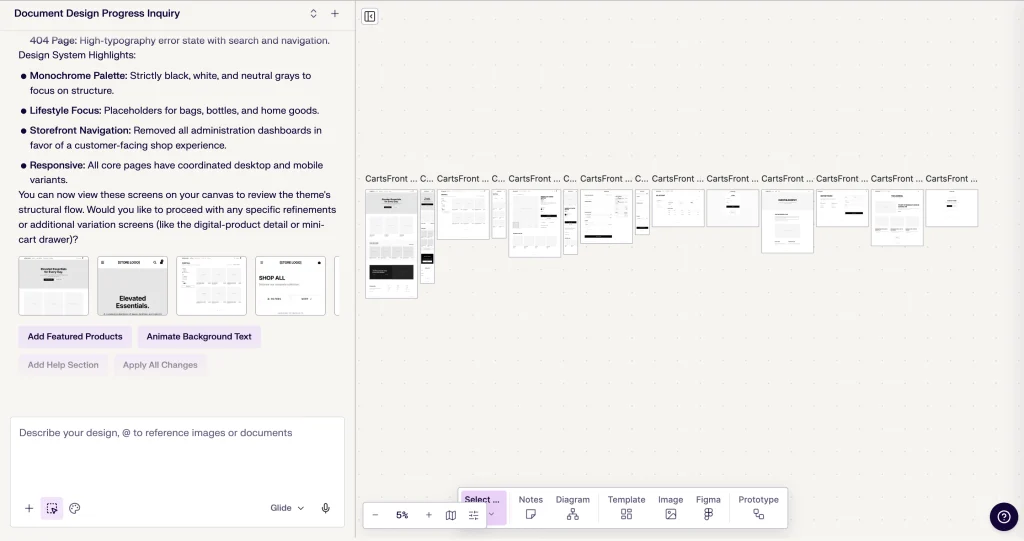
UX Pilot — best for UX-focused wireframes and flows
Google Stitch — best for fast AI-generated multi-screen UI
Figma Make — best for wireframes that need to grow inside Figma
1. Visily: Best Overall AI Wireframe Generator for Product Teams
Best for: PMs, founders, designers, and stakeholders creating editable product flows together
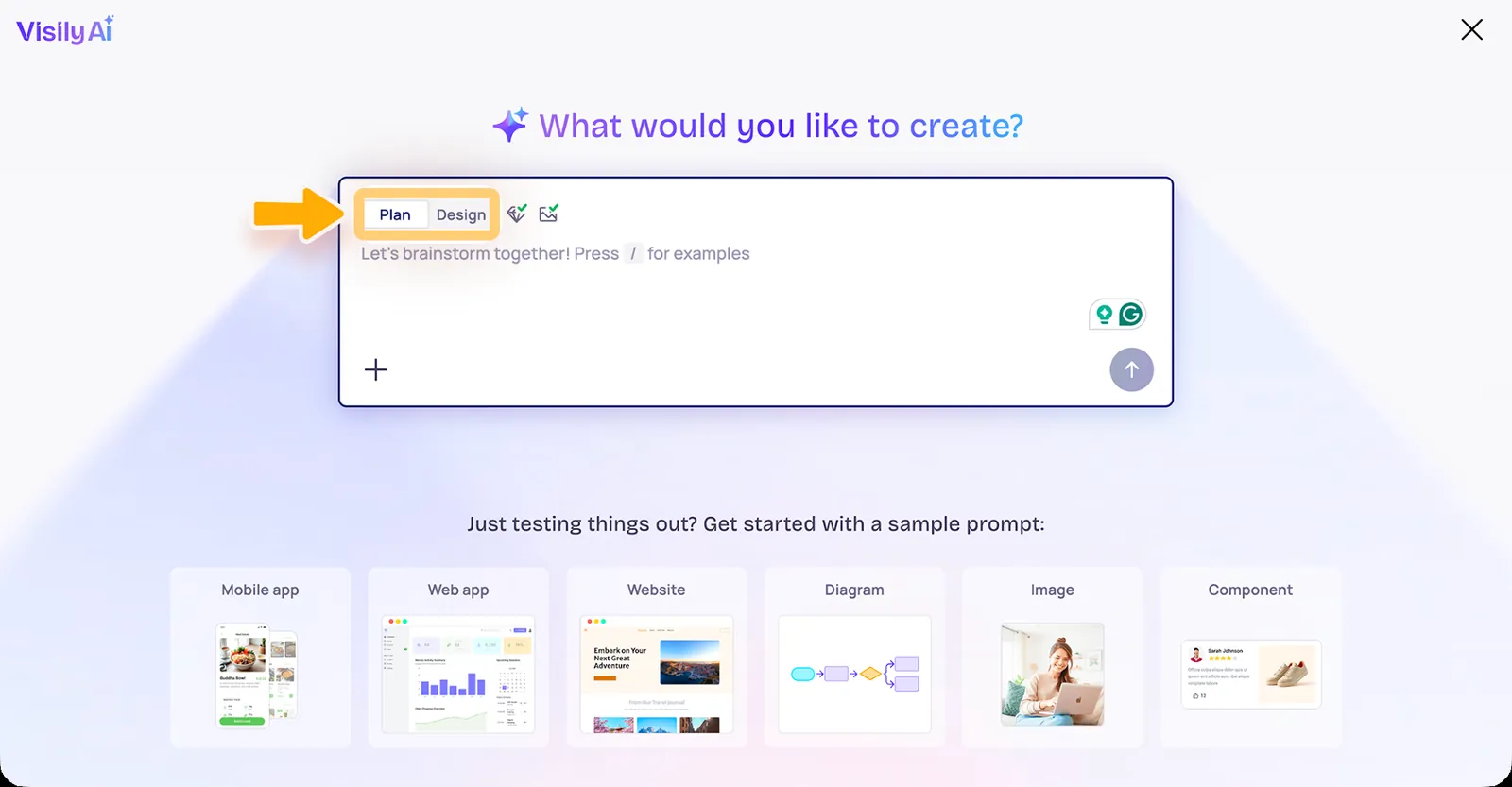
Visily is strong because AI generation is only one part of the workflow. You can create screens, switch between low- and high-fidelity modes, build interactive prototypes, use templates, and keep the result editable. Paid plans add Figma import/export and code export.
The Starter plan is free. Pro is currently $11 per editor/month billed annually and includes 3,000 AI credits per editor/month, unlimited boards, AI deep design, Figma import/export, code export, and Visily MCP.
Why it ranks first: it stays useful after the first generation. A PM can sketch a flow, a designer can refine it, and the team can move it toward Figma or code.
Best for: SaaS screens, dashboards, mobile/web app flows.
Watch out for: professional design teams may still prefer Figma as the final source of truth.
2. Uizard: Best AI Wireframe Generator for Beginners
Best for: Founders, marketers, students, and non-designers who want a concept on screen quickly
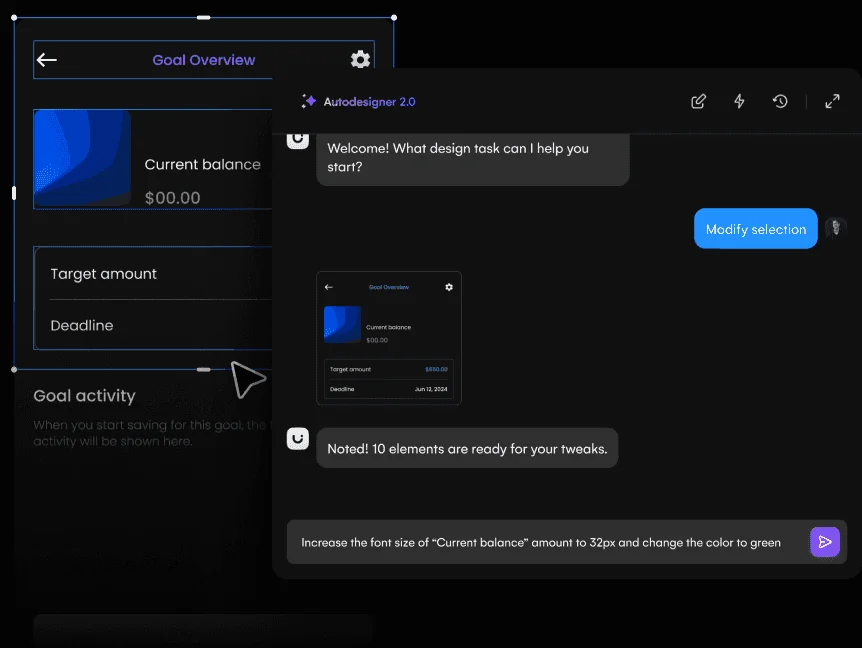
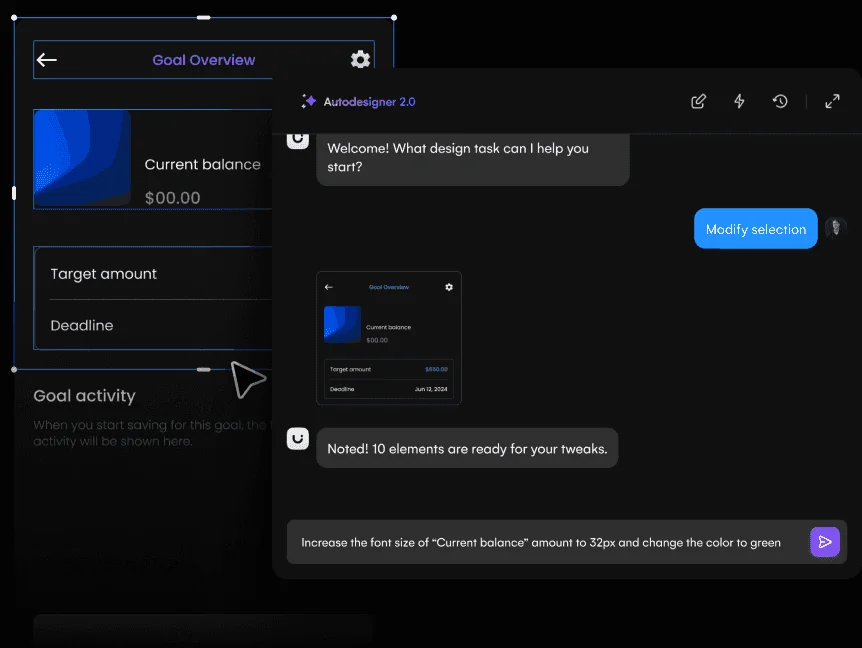
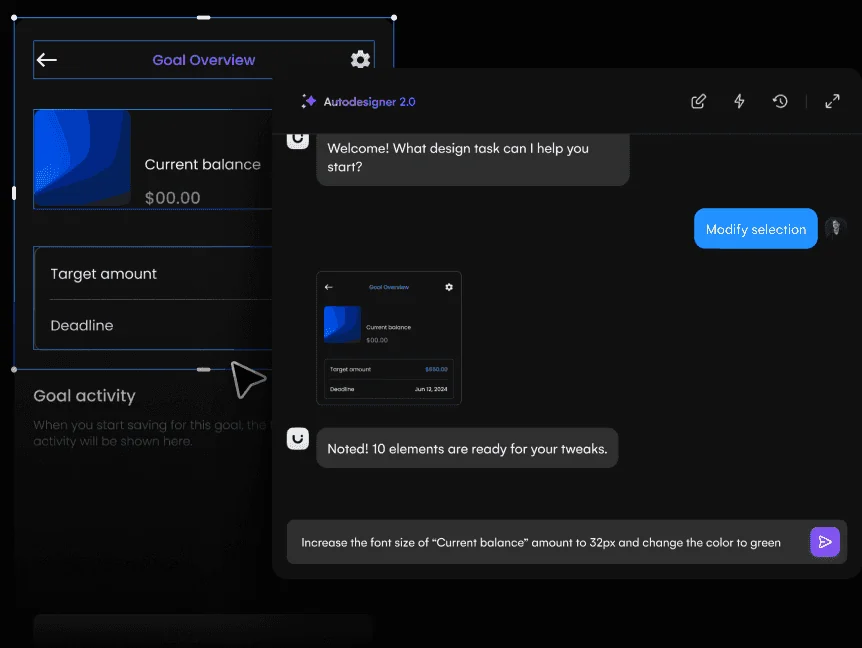
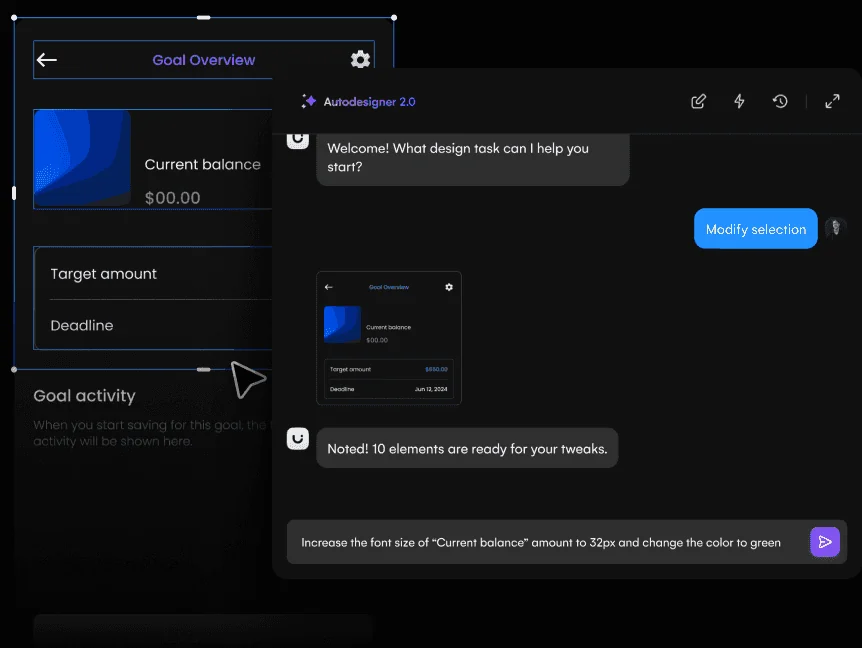
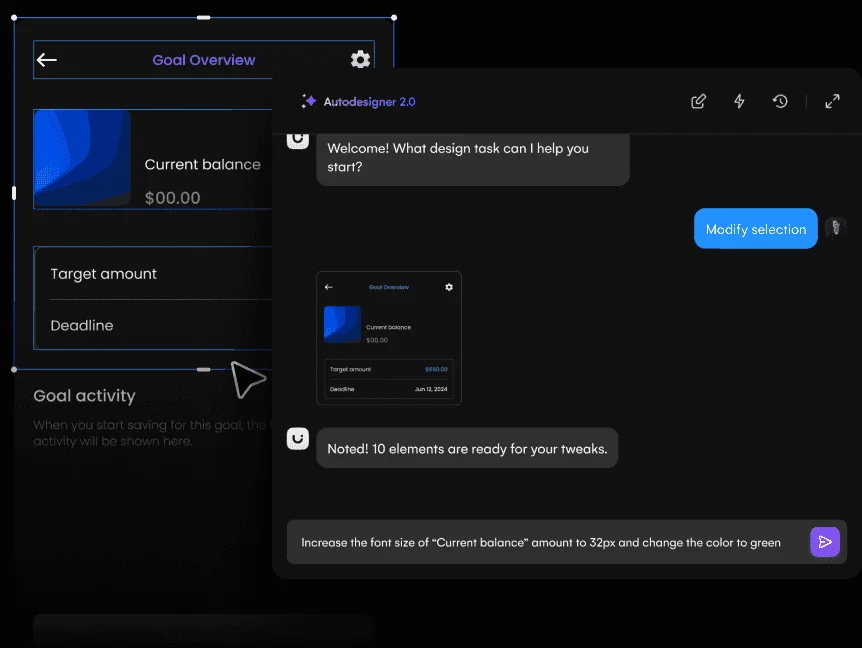
Uizard made prompt-to-interface generation approachable early, and Autodesigner remains its defining workflow. You can start from a text description, generate screens, work with templates, wireframe, add interactions, and hand designs to developers.
The Free plan includes three AI generations per month and two projects. Pro is currently $12/month billed annually with 500 AI generations per month, up to 100 projects, private projects, and React/CSS developer handoff.
Why choose it: the learning curve is low and the tool is built around getting from idea to visual quickly.
Best for: first-pass mobile apps, web apps, stakeholder mockups.
Watch out for: limited free AI generations make the free plan more of a trial than a high-volume workflow.
Best for: Agencies and web teams that need a sitemap and page structure before visual design
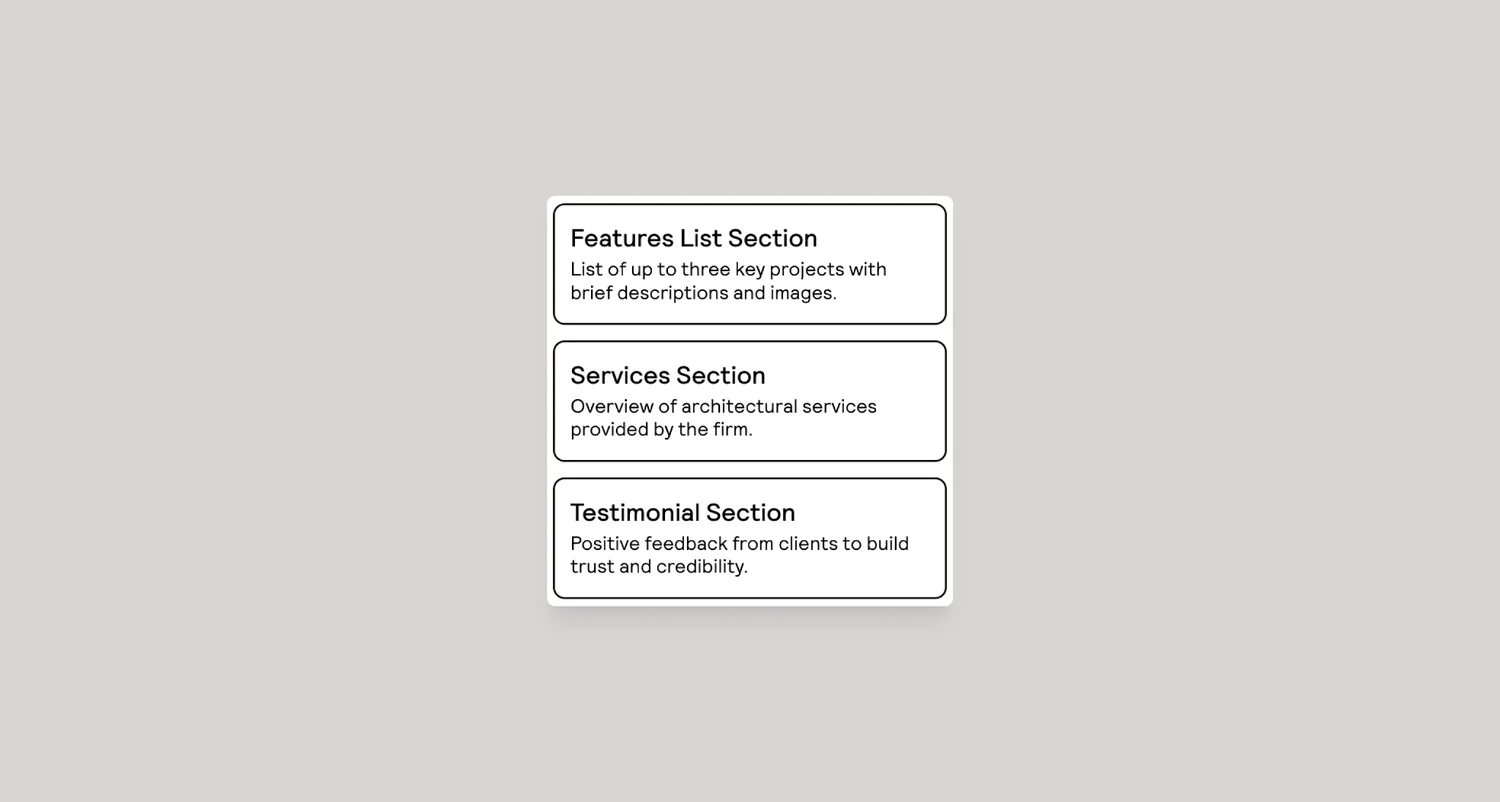
Relume starts one level above the individual screen. Give it a website brief and it can generate a sitemap, then turn the pages into wireframes. That sequence is valuable because website projects often fail at information architecture before they fail at visual design.
Instead of asking AI to decorate a homepage, Relume helps teams decide what pages and sections should exist. From there, the work can move into Figma or Webflow.
Why choose it: sitemap → wireframe is a more disciplined website-planning workflow than one-shot page generation.
Best for: marketing sites, SaaS websites, agency client projects.
Watch out for: it is less suited to complex application flows than product-focused tools.
Best for: UX designers who want AI generation alongside flow thinking and UX evaluation
UX Pilot is useful when wireframing is part of a larger UX process rather than a one-off deliverable. It supports AI-assisted wireframes and UI generation while keeping attention on user flows and product decisions.
That makes it a stronger fit for UX practitioners than generic AI site builders. You are not only asking for a pretty screen; you are exploring how a user moves through the product.
Why choose it: UX-specific workflow and Figma-oriented handoff.
Best for: onboarding, SaaS flows, mobile product concepts.
Watch out for: teams that want a deployable app from the same prompt should look at code-first builders instead.
5. Google Stitch: Best for Fast Multi-Screen UI Exploration
Best for: Teams that want to generate and compare UI directions rapidly
Google Stitch is more than a low-fidelity wireframing tool, but it belongs here because of how quickly it can turn intent into connected interface concepts. It is useful when the team wants to explore multiple screens, refine the direction conversationally, and then move toward Figma or frontend code.
Why choose it: speed and UI-specific generation.
Best for: web/mobile interface exploration and multi-screen concepts.
Watch out for: if your definition of wireframe means deliberately rough, low-fidelity structure, Visily, Relume, or UX Pilot may keep the team focused on structure more effectively.
Best for: Product teams that want AI generation without creating a disconnected design artifact
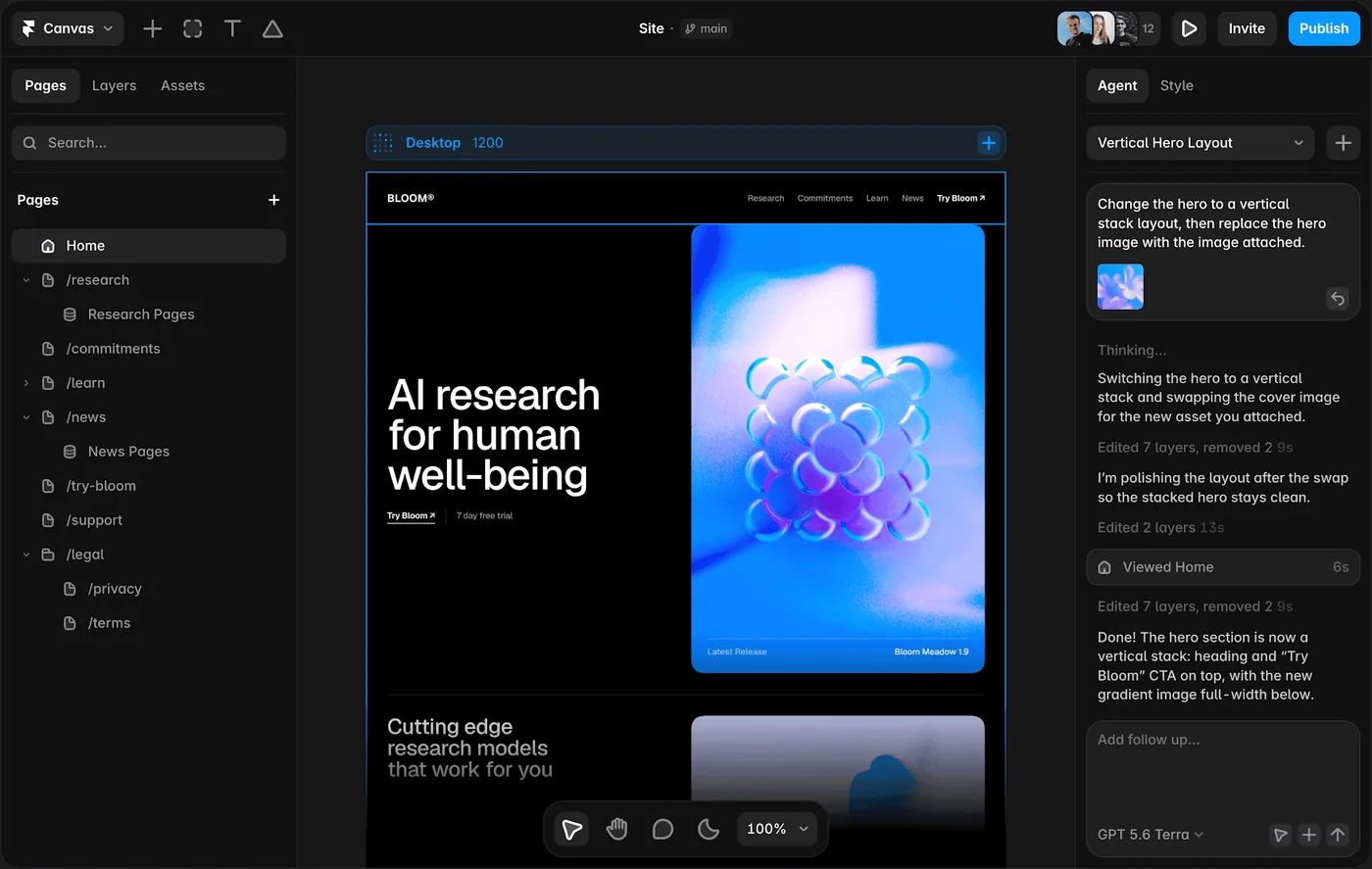
Figma Make can use existing Figma designs and components as prompt context, generate functional prototypes/web apps, and let teams copy generated results back into editable Figma design layers. That makes it a strong choice when a rough AI concept needs to mature inside an established design system.
Figma’s current Starter plan is free with limited AI access. Professional full seats are $16/month and include 3,000 AI credits/month.
Why choose it: continuity with Figma libraries, collaboration, and handoff.
Best for: teams with an existing Figma system.
Watch out for: if all you need is a quick low-fi wireframe, Figma’s broader environment may be more than you need.
For product teams with non-designers involved, start with Visily. For a beginner who wants a quick app concept, Uizard. For websites, Relume. For UX-heavy product discovery, UX Pilot. For rapid AI UI exploration, Google Stitch. For an established Figma team, Figma Make.
Do not judge these tools on the first screen. Use the same three-screen prompt in each tool, then change one requirement. The winner is the tool that keeps the flow coherent after iteration.
Visily is the strongest all-around pick for cross-functional product teams because it combines AI generation with editable wireframes, prototypes, hi-fi/lo-fi modes, and a path to Figma/code. The best choice changes by workflow: Relume is better for websites and Figma Make is better for teams already centered on Figma.
Can ChatGPT generate wireframes?
A general AI assistant can help define screens, content hierarchy, and flows, but a dedicated wireframing tool gives you an editable canvas, reusable components, interactions, and handoff workflows.
What is the best free AI wireframe generator?
Visily and Uizard both have free plans, while Google Stitch is attractive for rapid AI UI experimentation. Limits and availability should be checked before publication.
Can AI turn a screenshot into a wireframe?
Several modern AI design tools support screenshot/reference-driven workflows. Verify the exact import mode for the tool you choose because screenshot-to-editable-design capabilities vary by plan and product version.
A prototype used to mean a clickable set of screens. In 2026, that definition is too small.
AI prototyping tools now span a full fidelity spectrum. At one end, they generate wireframes and flows for a product conversation. At the other, they generate working React interfaces, authentication, databases, and deployable applications. The best tool depends on what you need to learn from the prototype.
If you are testing navigation, do not overbuild a full-stack app. If you are testing whether a workflow actually works, static screens may not be enough.
Our top six:
Figma Make — best overall for design teams
Lovable — best for full-stack MVP prototypes
v0 — best for code-first web UI prototypes
Google Stitch — best for fast multi-screen UI exploration
UX Pilot — best for UX-focused ideation and flows
Relume — best for website sitemaps and wireframe prototypes
Figma’s own 2026 AI prototyping guide also separates tools by fidelity, which is the right way to evaluate this category.
1. Figma Make: Best Overall AI Prototyping Tool for Product Teams
Best for: Designers who want prompt-to-functional prototypes with existing Figma context
Figma Make can generate functional prototypes and web apps from prompts while accepting Figma designs and components as context. It supports publishing, Supabase-backed functionality, attachments, planning, and copying generated work back into editable Figma design layers.
The key advantage is continuity. A designer can start from an existing component library instead of asking an AI builder to invent a new visual language every time.
Best for testing: interactions, product concepts, design-system-aware flows.
Not ideal when: you want the prototype to become the production repository immediately.
Best for: Founders and teams testing a product concept that needs real data, auth, APIs, or backend behavior
Lovable is useful when “clickable” is not enough. It can create working web applications through conversation, so a prototype can include application logic instead of only simulated transitions.
That is powerful for testing a SaaS workflow, marketplace concept, internal tool, or customer portal. Stakeholders can interact with something much closer to the intended product.
Best for testing: end-to-end workflows and MVP assumptions.
Not ideal when: you only need to validate information architecture or rough layout; building more can create false confidence and unnecessary complexity.
3. v0 by Vercel: Best for Code-First UI Prototypes
Best for: Technical product teams prototyping web interfaces in React/Next.js
v0 is strongest when the prototype should already speak the language of the implementation. Prompt an interface, iterate on the rendered result, and work with generated frontend code rather than translating a design-only prototype later.
This is especially useful for dashboards, admin tools, SaaS screens, forms, and component-rich web products.
Best for testing: real web UI behavior and component implementation.
Not ideal when: non-technical stakeholders need a traditional design canvas and collaborative UX documentation.
4. Google Stitch: Best for Fast Multi-Screen AI UI Prototyping
Best for: Exploring interface directions quickly before committing to a design system or codebase
Google Stitch is built around generating and iterating on UI. Its value is speed: start from intent, generate interface directions, connect screens into a flow, and move promising concepts toward Figma or frontend code.
That makes Stitch useful in the messy beginning of product work, when the team wants to compare several directions rather than polish one screen for hours.
Best for testing: screen structure, visual direction, multi-screen flows.
Not ideal when: you need a mature design-system source of truth or full application backend.
Best for: UX designers and product teams that want AI to assist with flows, wireframes, UI generation, and UX evaluation
UX Pilot is more focused on the UX process than the “build me an app” category. That makes it valuable when the purpose of the prototype is to reason about a user journey, explore a flow, or move from early wireframes toward higher-fidelity screens.
Best for testing: UX direction, flows, early interface decisions.
Not ideal when: you need production-ready frontend code as the main output.
6. Relume: Best for Website Structure + Wireframe Prototypes
Best for: Agencies, freelancers, and web teams validating sitemap and page structure before visual design
Relume solves a narrower problem exceptionally well. Start with a website brief, generate a sitemap, turn that structure into wireframes, then move the work toward Figma or Webflow.
That is a better prototyping workflow for many marketing websites than jumping directly into polished UI. The prototype answers the important questions first: What pages exist? What sections belong on each page? Does the content hierarchy make sense?
Best for testing: website information architecture and page composition.
Not ideal when: you are prototyping complex application logic.
Use the cheapest prototype that can answer the question.
Need to test structure? Start with Relume, UX Pilot, or an AI wireframe generator. Need to test a product flow visually? Figma Make or Google Stitch. Need to test working frontend behavior? v0. Need to test a functional MVP with backend behavior? Lovable.
This also prevents a common AI prototyping mistake: generating so much polished output that the team starts defending the prototype instead of learning from it.
It is software that uses generative AI to create or modify product prototypes from prompts, screenshots, design-system context, or other inputs. Depending on the tool, output can range from wireframes to working applications.
What is the best AI prototyping tool for designers?
Figma Make is the strongest all-around choice for teams already using Figma because generated prototypes can stay connected to existing designs and libraries.
What is the best AI prototyping tool for a startup MVP?
Lovable is a strong option when the prototype needs working application logic. v0 is better when the focus is a modern web frontend rather than a broader full-stack build.
What is the best AI tool for website wireframe prototypes?
Relume is particularly strong for generating website sitemaps and converting them into structured wireframes.
AI prototyping now covers two very different experiences. Some tools generate an editable simulation. Others generate working code with real routes and data. Both can be useful, but they answer different questions. This list makes that spectrum explicit before ranking anything.
Key Takeaways
Figma Make is the strongest pick for turning design context into functional prototypes and web experiences.
ProtoPie is the strongest pick for high-fidelity interaction prototypes with logic, sensors, and realistic behavior.
Uizard is the strongest pick for quick editable UI concepts for designers and non-designers.
Visily is the strongest pick for AI-assisted UI ideation for product teams that want fast editable results.
Lovable is the strongest pick for building complete web apps through conversation with visual editing and cloud services.
Simulation vs. Working Product
On one end, Uizard and Visily turn an idea into an editable interactive concept. In the middle, Figma Make and ProtoPie push interaction fidelity further. On the other end, Lovable and v0 can generate working code. Pick the point on that spectrum that answers your validation question without creating unnecessary build work.
How I Compared AI Prototyping Tools
First concept speed
Interaction depth
Real code or simulation
Data/backend support
Iteration
Shareability
Quick Comparison
Tool
Best For
Biggest Strength
Watch Out For
Figma Make
Turning design context into functional prototypes and web experiences
The strongest reason to choose it is continuity.
It makes the most sense inside a Figma-heavy workflow.
ProtoPie
High-fidelity interaction prototypes with logic, sensors, and realistic behavior
That makes it especially valuable for advanced mobile experiences, automotive interfaces, connected devices, and product ideas where the quality of the interaction is the thing being tested.
It is not the fastest place to sketch a rough screen.
Uizard
Quick editable ui concepts for designers and non-designers
It is particularly useful when the person shaping the product idea is not a full-time UI designer.
The ceiling is lower than Figma, Sketch, or a code-backed builder when you need a large design system, advanced interactions, or highly specific production handoff.
Visily
Ai-assisted ui ideation for product teams that want fast editable results
For product managers and founders, that can make it a practical middle ground between a whiteboard and a heavyweight design environment.
Advanced design-system work and final production handoff may still move to Figma or another specialist.
Lovable
Building complete web apps through conversation with visual editing and cloud services
Its appeal is the full journey.
It builds web applications, not native iOS or Android binaries.
v0
Prompt-to-frontend and full-stack web work inside the vercel ecosystem
Developers and technical product teams benefit from the proximity to modern React and Vercel workflows.
Non-technical users can get impressive first results, but production applications still need engineering decisions around architecture, data, testing, security, and maintainability.
1. Figma Make: Best for Turning design context into functional prototypes
Figma Make sits unusually close to the rest of the product-design workflow. You can start from a prompt, attach an existing Figma frame or design context, iterate visually, and move toward a code-backed interactive result without abandoning the design file.
On the simulation-to-working-product spectrum, Figma Make is valuable when you need turning design context into functional prototypes and web experiences. Pick that level deliberately so you do not overbuild the validation artifact.
The strongest reason to choose it is continuity. Teams already using Figma can keep components, feedback, design context, and prototyping closer together instead of exporting an early idea into a completely separate AI builder.
Where it fits best
Use Figma Make when turning design context into functional prototypes and web experiences. It is particularly useful when that need is already visible in your current workflow and the team can measure whether the tool actually removes a handoff, shortens iteration, or improves the quality of the artifact.
The tradeoff
It makes the most sense inside a Figma-heavy workflow. If your team wants a standalone AI builder, a code-first IDE experience, or an open-source design stack, other options can feel less opinionated.
Current context: Figma says its 2026 State of the Designer research found 72% of designers now use generative AI, and 91% of designers who increased AI usage say it improves output quality. Source
Image placement: Use a current in-product interface image showing Figma Make doing the job described above. Filename: best-ai-prototyping-tools-figma-make.webp. Keep WebP under 100 KB.
2. ProtoPie: Best for High-fidelity interaction prototypes with logic, sensors,
ProtoPie is built for the point where a clickable slideshow is no longer enough. It handles variables, conditions, sensors, multi-device interactions, API-connected behavior, and realistic microinteractions without requiring the prototype itself to become a production app.
On the simulation-to-working-product spectrum, ProtoPie is valuable when you need high-fidelity interaction prototypes with logic, sensors, and realistic behavior. Pick that level deliberately so you do not overbuild the validation artifact.
That makes it especially valuable for advanced mobile experiences, automotive interfaces, connected devices, and product ideas where the quality of the interaction is the thing being tested.
Where it fits best
Use ProtoPie when high-fidelity interaction prototypes with logic, sensors, and realistic behavior. It is particularly useful when that need is already visible in your current workflow and the team can measure whether the tool actually removes a handoff, shortens iteration, or improves the quality of the artifact.
The tradeoff
It is not the fastest place to sketch a rough screen. Most teams will design elsewhere first, then move the screens into ProtoPie when interaction fidelity becomes the priority.
Current context: ProtoPie introduced AI-assisted component authoring in June 2026, extending its interaction workflow with natural-language assistance. Source
Image placement: Use a current product workflow image showing ProtoPie doing the job described above. Filename: best-ai-prototyping-tools-protopie.webp. Keep WebP under 100 KB.
3. Uizard: Best for Quick editable ui concepts for designers
Uizard is built around getting from an idea to an editable interface quickly. Autodesigner can generate multi-screen app or website mockups from plain English, and the same workspace supports themes, screenshots-to-editable-design, components, flows, and interactive previews.
On the simulation-to-working-product spectrum, Uizard is valuable when you need quick editable UI concepts for designers and non-designers. Pick that level deliberately so you do not overbuild the validation artifact.
It is particularly useful when the person shaping the product idea is not a full-time UI designer. Product managers, founders, marketers, and early-stage teams can produce something concrete without learning a dense professional design environment first.
Where it fits best
Use Uizard when quick editable UI concepts for designers and non-designers. It is particularly useful when that need is already visible in your current workflow and the team can measure whether the tool actually removes a handoff, shortens iteration, or improves the quality of the artifact.
The tradeoff
The ceiling is lower than Figma, Sketch, or a code-backed builder when you need a large design system, advanced interactions, or highly specific production handoff.
Current context: Uizard describes Autodesigner as an AI system that generates multi-screen app and website mockups from plain-English prompts. Source
Image placement: Use a current in-product interface image showing Uizard doing the job described above. Filename: best-ai-prototyping-tools-uizard.webp. Keep WebP under 100 KB.
4. Visily: Best for Ai-assisted ui ideation for product teams that want fast editable results
Visily focuses on making UI creation accessible without turning every user into a professional interface designer. It can work from text, screenshots, and existing canvas context, and its AI features are designed to keep the result editable rather than producing a static inspiration image.
On the simulation-to-working-product spectrum, Visily is valuable when you need AI-assisted UI ideation for product teams that want fast editable results. Pick that level deliberately so you do not overbuild the validation artifact.
For product managers and founders, that can make it a practical middle ground between a whiteboard and a heavyweight design environment. Figma import and export also reduce the cost of bringing a designer in later.
Where it fits best
Use Visily when AI-assisted UI ideation for product teams that want fast editable results. It is particularly useful when that need is already visible in your current workflow and the team can measure whether the tool actually removes a handoff, shortens iteration, or improves the quality of the artifact.
The tradeoff
Advanced design-system work and final production handoff may still move to Figma or another specialist. Visily is most compelling in ideation and early validation.
Current context: Visily’s current paid plans include AI design instructions, Figma import/export, code export, and MCP features. Source
Image placement: Use a current product workflow image showing Visily doing the job described above. Filename: best-ai-prototyping-tools-visily.webp. Keep WebP under 100 KB.
5. Lovable: Best for Building complete web apps through conversation with visual editing
Lovable is an AI software-building environment aimed at people who want a working web app, not only a screen. It combines conversational building, visual edits, code ownership, integrations, cloud services, and GitHub sync so an early prototype can keep moving toward a real product.
On the simulation-to-working-product spectrum, Lovable is valuable when you need building complete web apps through conversation with visual editing and cloud services. Pick that level deliberately so you do not overbuild the validation artifact.
Its appeal is the full journey. A founder can validate an idea with real data, authentication, integrations, and deployment instead of showing users a click-through simulation.
Where it fits best
Use Lovable when building complete web apps through conversation with visual editing and cloud services. It is particularly useful when that need is already visible in your current workflow and the team can measure whether the tool actually removes a handoff, shortens iteration, or improves the quality of the artifact.
The tradeoff
It builds web applications, not native iOS or Android binaries. Teams with deep platform-specific mobile requirements will need a different toolchain.
Current context: Lovable’s current pricing page says users own their code and projects, while paid workspaces share a common credit pool rather than charging per seat. Source
Image placement: Use a current in-product interface image showing Lovable doing the job described above. Filename: best-ai-prototyping-tools-lovable.webp. Keep WebP under 100 KB.
v0 is strongest when the output needs to become real web code quickly. It can generate UI and application flows, edit visually through Design Mode, sync with GitHub, and deploy to Vercel, making it more of a build environment than a static mockup generator.
On the simulation-to-working-product spectrum, v0 is valuable when you need prompt-to-frontend and full-stack web work inside the Vercel ecosystem. Pick that level deliberately so you do not overbuild the validation artifact.
Developers and technical product teams benefit from the proximity to modern React and Vercel workflows. You can move from idea to component to deployed preview without copying the concept through a traditional handoff chain.
Where it fits best
Use v0 when prompt-to-frontend and full-stack web work inside the Vercel ecosystem. It is particularly useful when that need is already visible in your current workflow and the team can measure whether the tool actually removes a handoff, shortens iteration, or improves the quality of the artifact.
The tradeoff
Non-technical users can get impressive first results, but production applications still need engineering decisions around architecture, data, testing, security, and maintainability.
Current context: v0’s current free plan includes visual Design Mode, GitHub sync, and Vercel deployment; paid plans add more credits and team features. Source
Image placement: Use a current product workflow image showing v0 doing the job described above. Filename: best-ai-prototyping-tools-v0.webp. Keep WebP under 100 KB.
Which One Should You Choose?
Choose Figma Make if your priority is turning design context into functional prototypes and web experiences. Choose ProtoPie if your priority is high-fidelity interaction prototypes with logic, sensors, and realistic behavior. Choose Uizard if your priority is quick editable UI concepts for designers and non-designers.
Choose Visily if your priority is AI-assisted UI ideation for product teams that want fast editable results. Choose Lovable if your priority is building complete web apps through conversation with visual editing and cloud services. Choose v0 if your priority is prompt-to-frontend and full-stack web work inside the Vercel ecosystem.
Do not choose from the feature count alone. Pick the tool that removes the next expensive handoff in your workflow. If it only gives you a faster first draft but creates more cleanup later, the speed is mostly cosmetic.
FAQs
What is the best AI prototyping tools for most teams?
For most teams, Figma Make is the safest starting point because it matches the central job of this list: turning design context into functional prototypes and web experiences. The better answer can change quickly when your team has a strong platform, code, or workflow constraint.
Are free AI prototyping tools good enough?
Free plans are usually enough to test the workflow and judge first-result quality. The limits show up later in collaboration, AI credits, private projects, exports, version history, team controls, or production use. Test your real workflow before paying for a year.
Should AI replace the designer in this workflow?
No. AI is most useful for generating options, assembling first passes, translating structure, or automating repetitive edits. Problem framing, accessibility, product judgment, prioritization, and deciding which direction is actually right still need human ownership.
How should I evaluate these tools before buying?
Use one small real project. Give every candidate the same brief, the same existing assets, and the same correction request. Compare the second and third iterations, not just the first output. That exposes workflow friction much faster than a feature checklist.
Final Thoughts
The best AI prototyping tools is the one that makes the next decision cheaper. For this list, Figma Make is the strongest default, but the specialist options become better as soon as your constraint becomes specific. Match the tool to the output, handoff, and level of fidelity you actually need. That is how you get speed without simply moving the work somewhere else.
Website and app prototypes often get grouped together, but the job is different. A marketing site may need responsive layout, motion, and a path to publishing. An app prototype may need state, conditions, and realistic interactions. The best tool depends on which kind of truth you need the prototype to tell.
Key Takeaways
Framer is the strongest pick for website design that can move directly into a responsive published site.
Figma is the strongest pick for collaborative interface design from wireframe to developer handoff.
ProtoPie is the strongest pick for high-fidelity interaction prototypes with logic, sensors, and realistic behavior.
Axure RP is the strongest pick for complex functional prototypes with conditions, variables, forms, and business logic.
UXPin is the strongest pick for code-aware prototyping and design-system work.
Website Prototype or App Prototype?
For websites, responsiveness and publishability can matter more than sophisticated state logic. For applications, states, conditions, transitions, data, and device behavior matter more. Framer rises on the website side; ProtoPie and Axure rise when behavior gets complicated.
How I Compared Them
Responsive behavior
Interaction fidelity
Logic and state
Sharing
Publishing
Handoff
Quick Comparison
Tool
Best For
Biggest Strength
Watch Out For
Framer
Website design that can move directly into a responsive published site
The unusual advantage is that the design does not have to die at handoff.
It is website-centric.
Figma
Collaborative interface design from wireframe to developer handoff
Real-time collaboration, browser access, mature component systems, Dev Mode, and a huge surrounding ecosystem make it easy to bring product managers and developers into the same source of truth.
Because it can do almost everything, it can also encourage teams to polish too soon.
ProtoPie
High-fidelity interaction prototypes with logic, sensors, and realistic behavior
That makes it especially valuable for advanced mobile experiences, automotive interfaces, connected devices, and product ideas where the quality of the interaction is the thing being tested.
It is not the fastest place to sketch a rough screen.
Axure RP
Complex functional prototypes with conditions, variables, forms, and business logic
It is especially strong for internal tools, enterprise applications, financial products, and systems where errors usually happen in states and rules rather than in the visual styling.
The learning curve is real, and teams focused on modern visual collaboration may find Figma more inviting.
UXPin
Code-aware prototyping and design-system work
For organizations with an established component library, that can collapse the gap between what designers prototype and what engineers eventually build.
It is a more specialized choice than Figma.
Uizard
Quick editable ui concepts for designers and non-designers
It is particularly useful when the person shaping the product idea is not a full-time UI designer.
The ceiling is lower than Figma, Sketch, or a code-backed builder when you need a large design system, advanced interactions, or highly specific production handoff.
1. Framer: Best for Website design that can move directly into a responsive published site
Framer is strongest when the artifact you are designing is a website and the team wants to shorten the trip from layout to live URL. Responsive design, CMS, animations, interactions, and publishing live in one environment, while AI can help generate starting structures.
Framer is most convincing when the prototype needs website design that can move directly into a responsive published site. That tells you whether it belongs on the website side, the app side, or in both workflows.
The unusual advantage is that the design does not have to die at handoff. A marketing page or content site can keep evolving inside the same tool until it ships.
Where it fits best
Use Framer when website design that can move directly into a responsive published site. It is particularly useful when that need is already visible in your current workflow and the team can measure whether the tool actually removes a handoff, shortens iteration, or improves the quality of the artifact.
The tradeoff
It is website-centric. For large native applications, research-heavy UX work, or complicated enterprise interaction logic, it is usually better as a specialist rather than the main design platform.
Current context: Framer said in June 2026 that more than 188,000 companies across 200 countries were using the platform, powering more than 4 million published websites. Source
Image placement: Use a current in-product interface image showing Framer doing the job described above. Filename: best-prototyping-tools-websites-apps-framer.webp. Keep WebP under 100 KB.
2. Figma: Best for Collaborative interface design from wireframe to developer handoff
Figma remains the safest default for teams that want one workspace for interface design, reusable components, prototyping, comments, and handoff. Its biggest advantage is not a single feature. It is how little context has to be lost as a rough screen becomes a production-ready design.
Figma is most convincing when the prototype needs collaborative interface design from wireframe to developer handoff. That tells you whether it belongs on the website side, the app side, or in both workflows.
Real-time collaboration, browser access, mature component systems, Dev Mode, and a huge surrounding ecosystem make it easy to bring product managers and developers into the same source of truth.
Where it fits best
Use Figma when collaborative interface design from wireframe to developer handoff. It is particularly useful when that need is already visible in your current workflow and the team can measure whether the tool actually removes a handoff, shortens iteration, or improves the quality of the artifact.
The tradeoff
Because it can do almost everything, it can also encourage teams to polish too soon. Specialized tools are often faster for rough ideation, complex interaction logic, or code-backed prototypes.
Current context: Figma reports that 95% of the Fortune 500 uses its platform, based on March 2025 data. Source
Image placement: Use a current product workflow image showing Figma doing the job described above. Filename: best-prototyping-tools-websites-apps-figma.webp. Keep WebP under 100 KB.
3. ProtoPie: Best for High-fidelity interaction prototypes with logic, sensors,
ProtoPie is built for the point where a clickable slideshow is no longer enough. It handles variables, conditions, sensors, multi-device interactions, API-connected behavior, and realistic microinteractions without requiring the prototype itself to become a production app.
ProtoPie is most convincing when the prototype needs high-fidelity interaction prototypes with logic, sensors, and realistic behavior. That tells you whether it belongs on the website side, the app side, or in both workflows.
That makes it especially valuable for advanced mobile experiences, automotive interfaces, connected devices, and product ideas where the quality of the interaction is the thing being tested.
Where it fits best
Use ProtoPie when high-fidelity interaction prototypes with logic, sensors, and realistic behavior. It is particularly useful when that need is already visible in your current workflow and the team can measure whether the tool actually removes a handoff, shortens iteration, or improves the quality of the artifact.
The tradeoff
It is not the fastest place to sketch a rough screen. Most teams will design elsewhere first, then move the screens into ProtoPie when interaction fidelity becomes the priority.
Current context: ProtoPie introduced AI-assisted component authoring in June 2026, extending its interaction workflow with natural-language assistance. Source
Image placement: Use a current in-product interface image showing ProtoPie doing the job described above. Filename: best-prototyping-tools-websites-apps-protopie.webp. Keep WebP under 100 KB.
4. Axure RP: Best for Complex functional prototypes with conditions, variables, forms,
Axure RP still earns a place when a prototype needs to behave more like software than a slide deck. Conditional logic, dynamic panels, working forms, repeaters, variables, and data-driven interactions let teams model complex enterprise workflows before development.
Axure RP is most convincing when the prototype needs complex functional prototypes with conditions, variables, forms, and business logic. That tells you whether it belongs on the website side, the app side, or in both workflows.
It is especially strong for internal tools, enterprise applications, financial products, and systems where errors usually happen in states and rules rather than in the visual styling.
Where it fits best
Use Axure RP when complex functional prototypes with conditions, variables, forms, and business logic. It is particularly useful when that need is already visible in your current workflow and the team can measure whether the tool actually removes a handoff, shortens iteration, or improves the quality of the artifact.
The tradeoff
The learning curve is real, and teams focused on modern visual collaboration may find Figma more inviting. Axure pays off when logic matters enough to justify the extra setup.
Current context: Axure positions RP 11 around realistic functional prototypes and supports unlimited prototypes and reviewers on its paid plans. Source
Image placement: Use a current product workflow image showing Axure RP doing the job described above. Filename: best-prototyping-tools-websites-apps-axure-rp.webp. Keep WebP under 100 KB.
UXPin sits between traditional design tools and production code. Its prototyping supports logic, variables, states, and interactions, while Merge can let teams design with real React components pulled from a development system.
UXPin is most convincing when the prototype needs code-aware prototyping and design-system work. That tells you whether it belongs on the website side, the app side, or in both workflows.
For organizations with an established component library, that can collapse the gap between what designers prototype and what engineers eventually build. The prototype uses the same component logic instead of a visual imitation.
Where it fits best
Use UXPin when code-aware prototyping and design-system work. It is particularly useful when that need is already visible in your current workflow and the team can measure whether the tool actually removes a handoff, shortens iteration, or improves the quality of the artifact.
The tradeoff
It is a more specialized choice than Figma. Teams without a mature design system or code-component workflow may not use enough of its advantage to justify switching.
Current context: UXPin Merge supports code-component workflows through sources such as Storybook and Git, depending on plan and setup. Source
Image placement: Use a current in-product interface image showing UXPin doing the job described above. Filename: best-prototyping-tools-websites-apps-uxpin.webp. Keep WebP under 100 KB.
6. Uizard: Best for Quick editable ui concepts for designers
Uizard is built around getting from an idea to an editable interface quickly. Autodesigner can generate multi-screen app or website mockups from plain English, and the same workspace supports themes, screenshots-to-editable-design, components, flows, and interactive previews.
Uizard is most convincing when the prototype needs quick editable UI concepts for designers and non-designers. That tells you whether it belongs on the website side, the app side, or in both workflows.
It is particularly useful when the person shaping the product idea is not a full-time UI designer. Product managers, founders, marketers, and early-stage teams can produce something concrete without learning a dense professional design environment first.
Where it fits best
Use Uizard when quick editable UI concepts for designers and non-designers. It is particularly useful when that need is already visible in your current workflow and the team can measure whether the tool actually removes a handoff, shortens iteration, or improves the quality of the artifact.
The tradeoff
The ceiling is lower than Figma, Sketch, or a code-backed builder when you need a large design system, advanced interactions, or highly specific production handoff.
Current context: Uizard describes Autodesigner as an AI system that generates multi-screen app and website mockups from plain-English prompts. Source
Image placement: Use a current product workflow image showing Uizard doing the job described above. Filename: best-prototyping-tools-websites-apps-uizard.webp. Keep WebP under 100 KB.
Which One Should You Choose?
Choose Framer if your priority is website design that can move directly into a responsive published site. Choose Figma if your priority is collaborative interface design from wireframe to developer handoff. Choose ProtoPie if your priority is high-fidelity interaction prototypes with logic, sensors, and realistic behavior.
Choose Axure RP if your priority is complex functional prototypes with conditions, variables, forms, and business logic. Choose UXPin if your priority is code-aware prototyping and design-system work. Choose Uizard if your priority is quick editable UI concepts for designers and non-designers.
Do not choose from the feature count alone. Pick the tool that removes the next expensive handoff in your workflow. If it only gives you a faster first draft but creates more cleanup later, the speed is mostly cosmetic.
FAQs
What is the best best prototyping tools for most teams?
For most teams, Framer is the safest starting point because it matches the central job of this list: website design that can move directly into a responsive published site. The better answer can change quickly when your team has a strong platform, code, or workflow constraint.
Are free best prototyping tools good enough?
Free plans are usually enough to test the workflow and judge first-result quality. The limits show up later in collaboration, AI credits, private projects, exports, version history, team controls, or production use. Test your real workflow before paying for a year.
Should AI replace the designer in this workflow?
No. AI is most useful for generating options, assembling first passes, translating structure, or automating repetitive edits. Problem framing, accessibility, product judgment, prioritization, and deciding which direction is actually right still need human ownership.
How should I evaluate these tools before buying?
Use one small real project. Give every candidate the same brief, the same existing assets, and the same correction request. Compare the second and third iterations, not just the first output. That exposes workflow friction much faster than a feature checklist.
Final Thoughts
The best best prototyping tools is the one that makes the next decision cheaper. For this list, Framer is the strongest default, but the specialist options become better as soon as your constraint becomes specific. Match the tool to the output, handoff, and level of fidelity you actually need. That is how you get speed without simply moving the work somewhere else.
Every AI wireframe generator can make a first screen quickly. The useful test starts five minutes later. Can you change the navigation? Add an empty state? Match the structure of an existing product? Keep it low fidelity? I compared these tools around the speed of useful iteration, not the speed of the first screenshot.
Key Takeaways
Uizard is the strongest pick for quick editable UI concepts for designers and non-designers.
Visily is the strongest pick for AI-assisted UI ideation for product teams that want fast editable results.
Balsamiq is the strongest pick for deliberately rough, fast low-fidelity wireframes.
Figma Make is the strongest pick for turning design context into functional prototypes and web experiences.
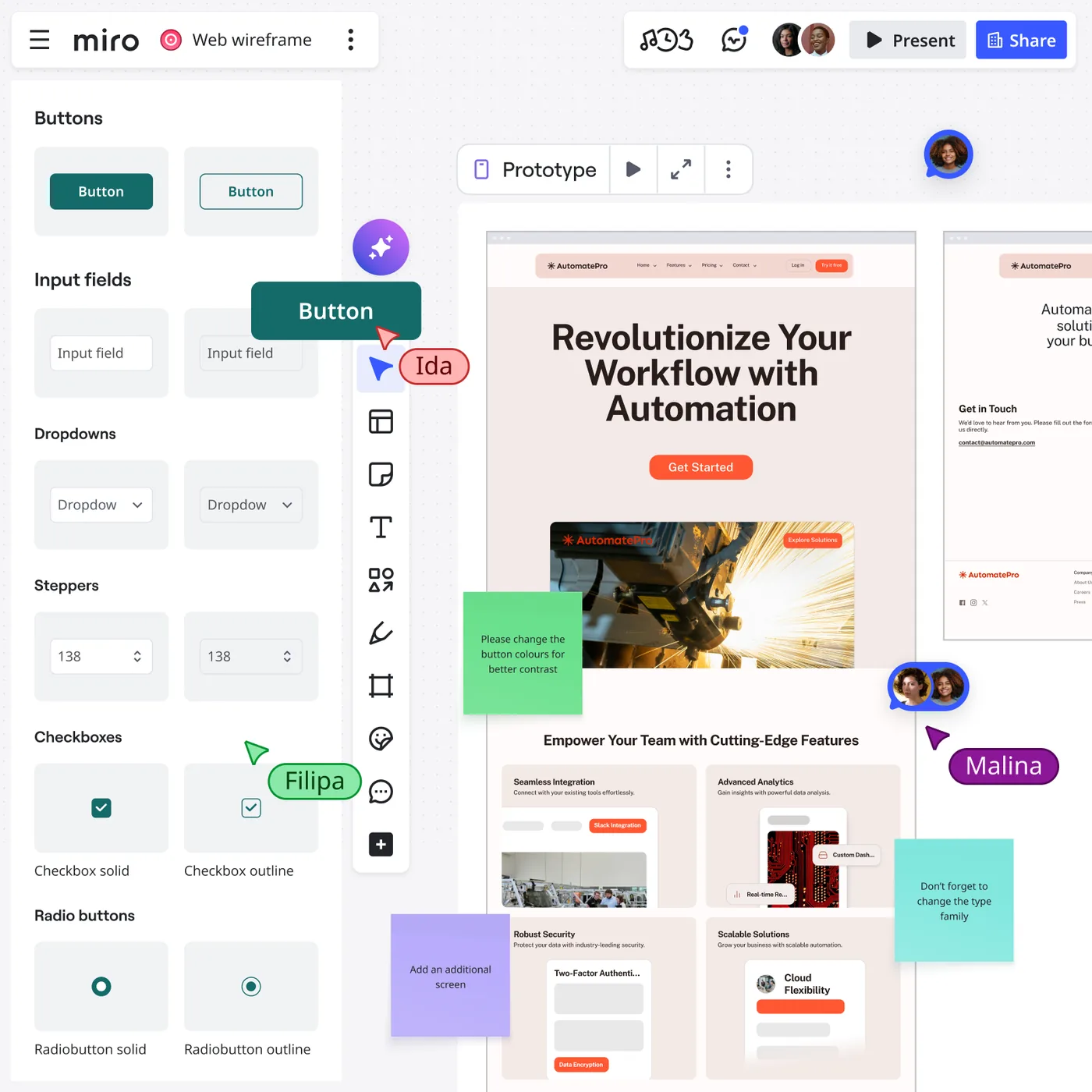
Miro is the strongest pick for collaborative discovery, workshops, research synthesis, flows, and early wireframes.
A Five-Minute Wireframe Test
Imagine the same brief in every tool: a mobile subscription app with onboarding, plan selection, checkout, and a success state. The useful generator is not the one that returns the prettiest onboarding screen. It is the one that lets you add the missing states and reshape the flow without starting over.
What Makes an AI Wireframe Useful
Prompt-to-first-wireframe time
Correction speed
Low-fidelity discipline
New-state generation
Editability
Export path
Quick Comparison
Tool
Best For
Biggest Strength
Watch Out For
Uizard
Quick editable ui concepts for designers and non-designers
It is particularly useful when the person shaping the product idea is not a full-time UI designer.
The ceiling is lower than Figma, Sketch, or a code-backed builder when you need a large design system, advanced interactions, or highly specific production handoff.
Visily
Ai-assisted ui ideation for product teams that want fast editable results
For product managers and founders, that can make it a practical middle ground between a whiteboard and a heavyweight design environment.
Advanced design-system work and final production handoff may still move to Figma or another specialist.
Balsamiq
Deliberately rough, fast low-fidelity wireframes
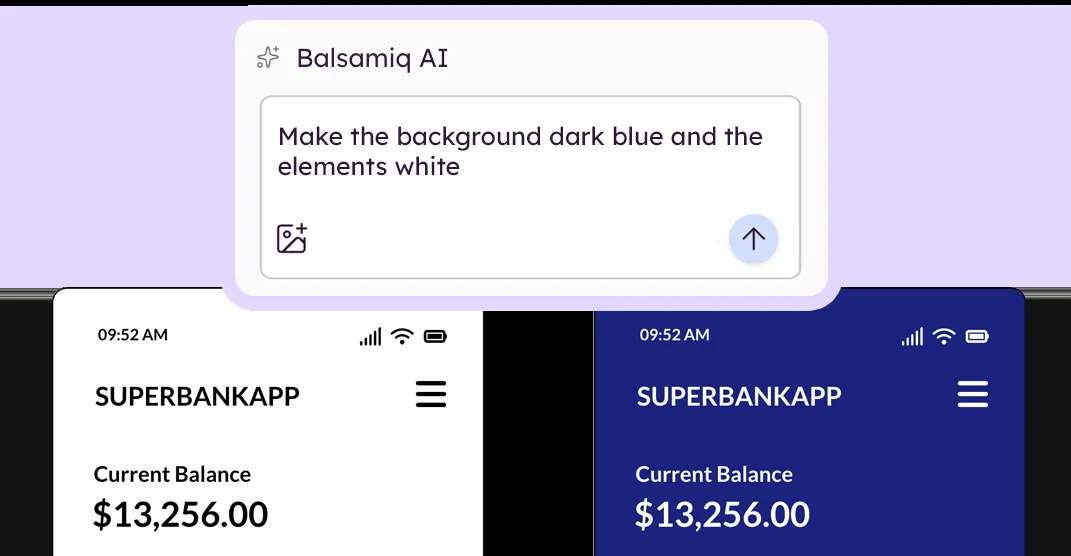
In 2026 the product also added AI-assisted wireframing, screenshot and sketch conversion, prototyping, and MCP support, but the real advantage is still the discipline created by roughness.
Once the structure is approved, most teams will move to another tool for final UI, design systems, and detailed visual production.
UX Pilot AI
AI-powered wireframes and high-fidelity multi-screen flows
Generates designs from prompts, sketches, or PRDs with design-system consistency, Figma and code export
Credit-based pricing; complex interactions and accessibility need review
Figma Make
Turning design context into functional prototypes and web experiences
The strongest reason to choose it is continuity.
It makes the most sense inside a Figma-heavy workflow.
Miro
Collaborative discovery, workshops, research synthesis, flows, and early wireframes
That context makes it one of the best tools for cross-functional discovery.
It is a collaboration workspace first.
Relume
Ai-assisted website sitemaps, wireframes, component-driven page planning, and export
The structure-first approach is the reason to use it.
It is not the tool for native app design or deeply custom interaction logic.
Google Stitch
Ai-native ui generation, exploration, and design-agent workflows
The strongest reason to use Stitch is exploration with an AI agent that understands the artifact as design context, not just an image.
It is still changing quickly.
1. Uizard: Best for Quick editable ui concepts for designers
Uizard is built around getting from an idea to an editable interface quickly. Autodesigner can generate multi-screen app or website mockups from plain English, and the same workspace supports themes, screenshots-to-editable-design, components, flows, and interactive previews.
Uizard earns points when the generated structure stays editable after the first prompt. Fast output is useful only if the next correction is fast too.
It is particularly useful when the person shaping the product idea is not a full-time UI designer. Product managers, founders, marketers, and early-stage teams can produce something concrete without learning a dense professional design environment first.
Where it fits best
Use Uizard when quick editable UI concepts for designers and non-designers. It is particularly useful when that need is already visible in your current workflow and the team can measure whether the tool actually removes a handoff, shortens iteration, or improves the quality of the artifact.
The tradeoff
The ceiling is lower than Figma, Sketch, or a code-backed builder when you need a large design system, advanced interactions, or highly specific production handoff.
Current context: Uizard describes Autodesigner as an AI system that generates multi-screen app and website mockups from plain-English prompts. Source
2. Visily: Best for Ai-assisted ui ideation for product teams that want fast editable results
Visily focuses on making UI creation accessible without turning every user into a professional interface designer. It can work from text, screenshots, and existing canvas context, and its AI features are designed to keep the result editable rather than producing a static inspiration image.
Visily earns points when the generated structure stays editable after the first prompt. Fast output is useful only if the next correction is fast too.
For product managers and founders, that can make it a practical middle ground between a whiteboard and a heavyweight design environment. Figma import and export also reduce the cost of bringing a designer in later.
Where it fits best
Use Visily when AI-assisted UI ideation for product teams that want fast editable results. It is particularly useful when that need is already visible in your current workflow and the team can measure whether the tool actually removes a handoff, shortens iteration, or improves the quality of the artifact.
The tradeoff
Advanced design-system work and final production handoff may still move to Figma or another specialist. Visily is most compelling in ideation and early validation.
Current context: Visily’s current paid plans include AI design instructions, Figma import/export, code export, and MCP features. Source
3. UX Pilot: Best for AI-Powered Wireframes and Multi-Screen User Flows
UX Pilot makes wireframing less about drawing individual screens and more about shaping an entire product experience. Give it a text prompt, sketch, screenshot, or website reference, and it generates editable wireframes that you can refine without rebuilding everything from scratch.
What makes UX Pilot particularly useful is how it handles multi-screen workflows. Its Autoflow feature can generate connected screens for an entire user journey, from onboarding and account setup to dashboards and checkout pages.
For example, if you’re planning a subscription app, you can describe the overall experience and generate the initial flow. From there, you can ask the AI to rearrange navigation, adjust content hierarchy, or refine individual sections using natural language.
The flexibility doesn’t end with low-fidelity wireframes. UX Pilot also supports high-fidelity UI generation and integrates with Figma, allowing designers to export editable layouts and continue working within their existing design environment.
That makes it particularly interesting for teams that need to move quickly from rough ideas to something stakeholders can review and developers can build upon.
Where it fits best
UX Pilot is a strong choice for product designers, startups, and agencies creating multi-screen web or mobile applications. It’s especially useful when your workflow involves frequent revisions, stakeholder feedback, and Figma-based collaboration.
The tradeoff
UX Pilot goes well beyond basic wireframing. It can turn a prompt, sketch, or PRD into complete, high-fidelity, multi-screen flows while maintaining consistency with an imported design system. With editable Figma layers, code exports, and developer handoff options, moving from design to development is considerably easier.
The main consideration is quality control. Even polished AI-generated designs need validation for complex interactions, edge cases, responsive behavior, and accessibility. UX Pilot also operates on a credit-based system, so frequent iterations across large projects can increase usage costs. Source
4. Balsamiq: Best for Deliberately rough, fast low-fidelity wireframes
Balsamiq is valuable because it refuses to pretend an early idea is finished. Its intentionally sketch-like visual language keeps discussions focused on structure, flow, hierarchy, and missing steps rather than color, typography, and polish.
Balsamiq earns points when the generated structure stays editable after the first prompt. Fast output is useful only if the next correction is fast too.
In 2026 the product also added AI-assisted wireframing, screenshot and sketch conversion, prototyping, and MCP support, but the real advantage is still the discipline created by roughness.
Where it fits best
Use Balsamiq when deliberately rough, fast low-fidelity wireframes. It is particularly useful when that need is already visible in your current workflow and the team can measure whether the tool actually removes a handoff, shortens iteration, or improves the quality of the artifact.
The tradeoff
Once the structure is approved, most teams will move to another tool for final UI, design systems, and detailed visual production.
Current context: Balsamiq now supports AI-assisted wireframe generation and prompt-based editing alongside its traditional drag-and-drop workflow. Source
5. Figma Make: Best for Turning design context into functional prototypes
Figma Make sits unusually close to the rest of the product-design workflow. You can start from a prompt, attach an existing Figma frame or design context, iterate visually, and move toward a code-backed interactive result without abandoning the design file.
Figma Make earns points when the generated structure stays editable after the first prompt. Fast output is useful only if the next correction is fast too.
The strongest reason to choose it is continuity. Teams already using Figma can keep components, feedback, design context, and prototyping closer together instead of exporting an early idea into a completely separate AI builder.
Where it fits best
Use Figma Make when turning design context into functional prototypes and web experiences. It is particularly useful when that need is already visible in your current workflow and the team can measure whether the tool actually removes a handoff, shortens iteration, or improves the quality of the artifact.
The tradeoff
It makes the most sense inside a Figma-heavy workflow. If your team wants a standalone AI builder, a code-first IDE experience, or an open-source design stack, other options can feel less opinionated.
Current context: Figma says its 2026 State of the Designer research found 72% of designers now use generative AI, and 91% of designers who increased AI usage say it improves output quality. Source
6. Miro: Best for Collaborative discovery, workshops, research synthesis, flows,
Miro is useful when the design problem is still messy. Research notes, journey maps, service blueprints, flow diagrams, workshop voting, competitor references, and rough wireframes can live on the same board instead of being split across six documents.
Miro earns points when the generated structure stays editable after the first prompt. Fast output is useful only if the next correction is fast too.
That context makes it one of the best tools for cross-functional discovery. Product, design, engineering, and stakeholders can work visibly together before the team commits to polished screens.
Where it fits best
Use Miro when collaborative discovery, workshops, research synthesis, flows, and early wireframes. It is particularly useful when that need is already visible in your current workflow and the team can measure whether the tool actually removes a handoff, shortens iteration, or improves the quality of the artifact.
The tradeoff
It is a collaboration workspace first. Once a screen needs a production-grade component system, advanced visual design, or precise handoff, most teams will move into a dedicated design environment.
Current context: Miro says more than 100 million users across 250,000 organizations use its platform. Source
7. Relume: Best for Ai-assisted website sitemaps, wireframes, component-driven page planning,
Relume is focused on websites rather than general-purpose app UI. It can turn a website brief into a sitemap and structured wireframes, then move those sections into a component system that connects well with Figma and Webflow-oriented workflows.
Relume earns points when the generated structure stays editable after the first prompt. Fast output is useful only if the next correction is fast too.
The structure-first approach is the reason to use it. It encourages teams to settle page inventory, section order, and content architecture before getting lost in visual details.
Where it fits best
Use Relume when AI-assisted website sitemaps, wireframes, component-driven page planning, and export. It is particularly useful when that need is already visible in your current workflow and the team can measure whether the tool actually removes a handoff, shortens iteration, or improves the quality of the artifact.
The tradeoff
It is not the tool for native app design or deeply custom interaction logic. Its strongest workflows are marketing sites, content sites, agency work, and repeatable website production.
Current context: Relume has been testing a 2026 Publish workflow that extends its sitemap-and-component model toward a hosted end-to-end website workflow. Source
8. Google Stitch: Best for Ai-native ui generation, exploration,
Google Stitch has evolved into an AI-native design canvas rather than a simple prompt-to-screen experiment. Its 2026 updates added an infinite canvas, high-fidelity UI generation from natural language and visual context, design agents, instant prototyping, DESIGN.md, and developer-facing MCP and SDK workflows.
Google Stitch earns points when the generated structure stays editable after the first prompt. Fast output is useful only if the next correction is fast too.
The strongest reason to use Stitch is exploration with an AI agent that understands the artifact as design context, not just an image. It is increasingly useful as a bridge between early interface ideas and downstream code-oriented tools.
Where it fits best
Use Google Stitch when AI-native UI generation, exploration, and design-agent workflows. It is particularly useful when that need is already visible in your current workflow and the team can measure whether the tool actually removes a handoff, shortens iteration, or improves the quality of the artifact.
The tradeoff
It is still changing quickly. Teams that need a long-established enterprise design-system workflow may prefer Figma or an established code-aware platform until their Stitch process is proven.
Current context: Google’s March 2026 Stitch update introduced an AI-native infinite canvas, design agents, instant prototypes, DESIGN.md, MCP, and SDK access. Source
Which One Should You Choose?
Choose Uizard if your priority is quick, editable UI concepts for designers and non-designers. Choose Visily if you need AI-assisted UI ideation and fast, editable results for product teams.
You should choose UX Pilot if you want to turn prompts, sketches, or PRDs into complete, high-fidelity, multi-screen flows while maintaining design-system consistency. It’s particularly useful for teams that need editable Figma designs and a smoother handoff to development.
Balsamiq can be your option if your priority is deliberately rough, fast, low-fidelity wireframes. Choose Figma Make if you want to turn design context into functional prototypes and web experiences.
Go for Miro for collaborative discovery, workshops, research synthesis, user flows, and early wireframes. Choose Relume for AI-assisted website sitemaps, wireframes, component-driven page planning, and export. Choose Google Stitch for AI-native UI generation, exploration, and design-agent workflows.
Don’t choose based on feature count alone. Pick the tool that removes the next expensive handoff in your workflow. If it only gives you a faster first draft but creates more cleanup later, the speed is mostly cosmetic.
FAQs
What is the best AI wireframe generator for most teams?
For most teams, Uizard is the safest starting point because it matches the central job of this list: quick editable UI concepts for designers and non-designers. The better answer can change quickly when your team has a strong platform, code, or workflow constraint.
Are free AI wireframe generator good enough?
Free plans are usually enough to test the workflow and judge first-result quality. The limits show up later in collaboration, AI credits, private projects, exports, version history, team controls, or production use. Test your real workflow before paying for a year.
Should AI replace the designer in this workflow?
No. AI is most useful for generating options, assembling first passes, translating structure, or automating repetitive edits. Problem framing, accessibility, product judgment, prioritization, and deciding which direction is actually right still need human ownership.
How should I evaluate these tools before buying?
Use one small real project. Give every candidate the same brief, the same existing assets, and the same correction request. Compare the second and third iterations, not just the first output. That exposes workflow friction much faster than a feature checklist.
Final Thoughts
The best AI wireframe generator is the one that makes the next decision cheaper. For this list, Uizard is the strongest default, but the specialist options become better as soon as your constraint becomes specific. Match the tool to the output, handoff, and level of fidelity you actually need. That is how you get speed without simply moving the work somewhere else.
Designers rarely want a wireframe to stay a wireframe forever. The useful question is what happens when the structure is approved. Can the same file mature into high-fidelity UI? Can components survive? Can the prototype continue? These seven tools are judged on that transition.
Key Takeaways
Figma is the strongest pick for collaborative interface design from wireframe to developer handoff.
Sketch is the strongest pick for native Mac interface design with mature prototyping and handoff.
Penpot is the strongest pick for open-source UI design, self-hosting, and closer design-to-code alignment.
Miro is the strongest pick for collaborative discovery, workshops, research synthesis, flows, and early wireframes.
Whimsical is the strongest pick for fast flows, diagrams, and lightweight wireframing.
Wireframe Today, Design Tomorrow
A designer-friendly wireframe should keep the information architecture intact while making it easy to add real spacing, typography, components, states, and prototypes later. Tools that force a complete rebuild lose points here, even if the initial sketch is fast.
How I Ranked the Tools
Wireframing speed
Component reuse
High-fidelity path
Prototyping
Collaboration
Handoff
Quick Comparison
Tool
Best For
Biggest Strength
Watch Out For
Figma
Collaborative interface design from wireframe to developer handoff
Real-time collaboration, browser access, mature component systems, Dev Mode, and a huge surrounding ecosystem make it easy to bring product managers and developers into the same source of truth.
Because it can do almost everything, it can also encourage teams to polish too soon.
Sketch
Native mac interface design with mature prototyping and handoff
Designers who value a native desktop workflow, local files, and a mature Mac product can find it calmer than an everything-in-the-browser stack.
Designing still requires macOS, which makes it a poor default for mixed-platform teams.
Penpot
Open-source ui design, self-hosting, and closer design-to-code alignment
Its emphasis on web standards, CSS Grid, Flex Layout, tokens, and developer collaboration gives it a different center of gravity from Figma.
The ecosystem is smaller than Figma’s, and some teams will miss the volume of templates, plugins, community files, and established workflows surrounding the market leader.
Miro
Collaborative discovery, workshops, research synthesis, flows, and early wireframes
That context makes it one of the best tools for cross-functional discovery.
It is a collaboration workspace first.
Whimsical
Fast flows, diagrams, and lightweight wireframing
Its constrained visual language reduces setup and keeps early product discussions moving.
Once the work moves into high-fidelity UI and detailed handoff, most teams will switch to a dedicated design tool.
Moqups
Browser-based wireframes, mockups, diagrams, and simple prototypes
It works well for teams that want a straightforward visual planning tool without committing to a large component-and-dev-mode ecosystem.
It is less compelling for advanced design systems, cutting-edge AI generation, and deep code integration than newer specialist platforms.
Framer
Website design that can move directly into a responsive published site
The unusual advantage is that the design does not have to die at handoff.
It is website-centric.
1. Figma: Best for Collaborative interface design from wireframe to developer handoff
Figma remains the safest default for teams that want one workspace for interface design, reusable components, prototyping, comments, and handoff. Its biggest advantage is not a single feature. It is how little context has to be lost as a rough screen becomes a production-ready design.
The designer question is what happens after approval. Figma is strongest when the early structure can continue toward collaborative interface design from wireframe to developer handoff without a painful rebuild.
Real-time collaboration, browser access, mature component systems, Dev Mode, and a huge surrounding ecosystem make it easy to bring product managers and developers into the same source of truth.
Where it fits best
Use Figma when collaborative interface design from wireframe to developer handoff. It is particularly useful when that need is already visible in your current workflow and the team can measure whether the tool actually removes a handoff, shortens iteration, or improves the quality of the artifact.
The tradeoff
Because it can do almost everything, it can also encourage teams to polish too soon. Specialized tools are often faster for rough ideation, complex interaction logic, or code-backed prototypes.
Current context: Figma reports that 95% of the Fortune 500 uses its platform, based on March 2025 data. Source
2. Sketch: Best for Native mac interface design with mature prototyping
Sketch remains a focused product-design environment for Mac-first teams. It combines reusable components, libraries, prototyping, and developer-facing web inspection without turning the interface into a general whiteboard or website builder.
The designer question is what happens after approval. Sketch is strongest when the early structure can continue toward native Mac interface design with mature prototyping and handoff without a painful rebuild.
Designers who value a native desktop workflow, local files, and a mature Mac product can find it calmer than an everything-in-the-browser stack.
Where it fits best
Use Sketch when native Mac interface design with mature prototyping and handoff. It is particularly useful when that need is already visible in your current workflow and the team can measure whether the tool actually removes a handoff, shortens iteration, or improves the quality of the artifact.
The tradeoff
Designing still requires macOS, which makes it a poor default for mixed-platform teams. Browser collaboration helps reviewers, but the authoring environment is a deliberate platform choice.
Current context: Sketch currently requires macOS Sonoma 14 or newer for design work, while its web app supports viewing, inspecting, and commenting. Source
3. Penpot: Best for Open-source ui design, self-hosting,
Penpot is the strongest mainstream option for teams that want an open-source design platform rather than another proprietary design file. It runs in the browser, supports reusable components and prototypes, and can be self-hosted.
The designer question is what happens after approval. Penpot is strongest when the early structure can continue toward open-source UI design, self-hosting, and closer design-to-code alignment without a painful rebuild.
Its emphasis on web standards, CSS Grid, Flex Layout, tokens, and developer collaboration gives it a different center of gravity from Figma. Ownership and implementation structure are part of the product story.
Where it fits best
Use Penpot when open-source UI design, self-hosting, and closer design-to-code alignment. It is particularly useful when that need is already visible in your current workflow and the team can measure whether the tool actually removes a handoff, shortens iteration, or improves the quality of the artifact.
The tradeoff
The ecosystem is smaller than Figma’s, and some teams will miss the volume of templates, plugins, community files, and established workflows surrounding the market leader.
Current context: Penpot’s official media kit reports more than 1 million users and availability in more than 49 languages. Source
4. Miro: Best for Collaborative discovery, workshops, research synthesis, flows,
Miro is useful when the design problem is still messy. Research notes, journey maps, service blueprints, flow diagrams, workshop voting, competitor references, and rough wireframes can live on the same board instead of being split across six documents.
The designer question is what happens after approval. Miro is strongest when the early structure can continue toward collaborative discovery, workshops, research synthesis, flows, and early wireframes without a painful rebuild.
That context makes it one of the best tools for cross-functional discovery. Product, design, engineering, and stakeholders can work visibly together before the team commits to polished screens.
Where it fits best
Use Miro when collaborative discovery, workshops, research synthesis, flows, and early wireframes. It is particularly useful when that need is already visible in your current workflow and the team can measure whether the tool actually removes a handoff, shortens iteration, or improves the quality of the artifact.
The tradeoff
It is a collaboration workspace first. Once a screen needs a production-grade component system, advanced visual design, or precise handoff, most teams will move into a dedicated design environment.
Current context: Miro says more than 100 million users across 250,000 organizations use its platform. Source
Whimsical is a good fit when speed and clarity matter more than pixel-level control. Wireframes, flowcharts, mind maps, docs, and boards sit close together, which makes it easy to show how a screen relates to the flow around it.
The designer question is what happens after approval. Whimsical is strongest when the early structure can continue toward fast flows, diagrams, and lightweight wireframing without a painful rebuild.
Its constrained visual language reduces setup and keeps early product discussions moving. That is useful for small teams that do not need a full interface design system at the discovery stage.
Where it fits best
Use Whimsical when fast flows, diagrams, and lightweight wireframing. It is particularly useful when that need is already visible in your current workflow and the team can measure whether the tool actually removes a handoff, shortens iteration, or improves the quality of the artifact.
The tradeoff
Once the work moves into high-fidelity UI and detailed handoff, most teams will switch to a dedicated design tool.
Current context: Whimsical combines wireframes, flowcharts, boards, docs, and AI-assisted creation in one collaborative workspace. Source
6. Moqups: Best for Browser-based wireframes, mockups, diagrams,
Moqups covers the practical middle ground between a whiteboard and a full design suite. Teams can create wireframes, diagrams, mockups, and clickable flows in the browser, then share the work for review.
The designer question is what happens after approval. Moqups is strongest when the early structure can continue toward browser-based wireframes, mockups, diagrams, and simple prototypes without a painful rebuild.
It works well for teams that want a straightforward visual planning tool without committing to a large component-and-dev-mode ecosystem.
Where it fits best
Use Moqups when browser-based wireframes, mockups, diagrams, and simple prototypes. It is particularly useful when that need is already visible in your current workflow and the team can measure whether the tool actually removes a handoff, shortens iteration, or improves the quality of the artifact.
The tradeoff
It is less compelling for advanced design systems, cutting-edge AI generation, and deep code integration than newer specialist platforms.
Current context: Moqups combines wireframes, mockups, diagrams, and prototypes in a browser-based collaborative workspace. Source
7. Framer: Best for Website design that can move directly into a responsive published site
Framer is strongest when the artifact you are designing is a website and the team wants to shorten the trip from layout to live URL. Responsive design, CMS, animations, interactions, and publishing live in one environment, while AI can help generate starting structures.
The designer question is what happens after approval. Framer is strongest when the early structure can continue toward website design that can move directly into a responsive published site without a painful rebuild.
The unusual advantage is that the design does not have to die at handoff. A marketing page or content site can keep evolving inside the same tool until it ships.
Where it fits best
Use Framer when website design that can move directly into a responsive published site. It is particularly useful when that need is already visible in your current workflow and the team can measure whether the tool actually removes a handoff, shortens iteration, or improves the quality of the artifact.
The tradeoff
It is website-centric. For large native applications, research-heavy UX work, or complicated enterprise interaction logic, it is usually better as a specialist rather than the main design platform.
Current context: Framer said in June 2026 that more than 188,000 companies across 200 countries were using the platform, powering more than 4 million published websites. Source
Which One Should You Choose?
Choose Figma if your priority is collaborative interface design from wireframe to developer handoff. Choose Sketch if your priority is native Mac interface design with mature prototyping and handoff. Choose Penpot if your priority is open-source UI design, self-hosting, and closer design-to-code alignment.
Choose Miro if your priority is collaborative discovery, workshops, research synthesis, flows, and early wireframes. Choose Whimsical if your priority is fast flows, diagrams, and lightweight wireframing. Choose Moqups if your priority is browser-based wireframes, mockups, diagrams, and simple prototypes. Choose Framer if your priority is website design that can move directly into a responsive published site.
Do not choose from the feature count alone. Pick the tool that removes the next expensive handoff in your workflow. If it only gives you a faster first draft but creates more cleanup later, the speed is mostly cosmetic.
FAQs
What is the best best wireframing tools for most teams?
For most teams, Figma is the safest starting point because it matches the central job of this list: collaborative interface design from wireframe to developer handoff. The better answer can change quickly when your team has a strong platform, code, or workflow constraint.
Are free best wireframing tools good enough?
Free plans are usually enough to test the workflow and judge first-result quality. The limits show up later in collaboration, AI credits, private projects, exports, version history, team controls, or production use. Test your real workflow before paying for a year.
Should AI replace the designer in this workflow?
No. AI is most useful for generating options, assembling first passes, translating structure, or automating repetitive edits. Problem framing, accessibility, product judgment, prioritization, and deciding which direction is actually right still need human ownership.
How should I evaluate these tools before buying?
Use one small real project. Give every candidate the same brief, the same existing assets, and the same correction request. Compare the second and third iterations, not just the first output. That exposes workflow friction much faster than a feature checklist.
Final Thoughts
The best best wireframing tools is the one that makes the next decision cheaper. For this list, Figma is the strongest default, but the specialist options become better as soon as your constraint becomes specific. Match the tool to the output, handoff, and level of fidelity you actually need. That is how you get speed without simply moving the work somewhere else.
AI can make wireframing faster, but it can also ruin the point of wireframing. The moment a rough idea comes back looking like a polished product, teams start debating the wrong things. I picked these tools based on whether AI helps you explore structure without stealing the thinking from the UX process.
Key Takeaways
Balsamiq is the strongest pick for deliberately rough, fast low-fidelity wireframes.
Figma Make is the strongest pick for turning design context into functional prototypes and web experiences.
Uizard is the strongest pick for quick editable UI concepts for designers and non-designers.
Visily is the strongest pick for AI-assisted UI ideation for product teams that want fast editable results.
Miro is the strongest pick for collaborative discovery, workshops, research synthesis, flows, and early wireframes.
The Best AI Wireframe Is Not the Prettiest One
The best early wireframe still looks unfinished enough to invite change. I favored tools that keep structure editable, make iteration cheap, and let you delay typography and visual styling until those details actually matter.
What I Tested
Speed
Low-fidelity control
Editability
Flow creation
Collaboration
Ability to delay polish
Quick Comparison
Tool
Best For
Biggest Strength
Watch Out For
Balsamiq
Deliberately rough, fast low-fidelity wireframes
In 2026 the product also added AI-assisted wireframing, screenshot and sketch conversion, prototyping, and MCP support, but the real advantage is still the discipline created by roughness.
Once the structure is approved, most teams will move to another tool for final UI, design systems, and detailed visual production.
Figma Make
Turning design context into functional prototypes and web experiences
The strongest reason to choose it is continuity.
It makes the most sense inside a Figma-heavy workflow.
Uizard
Quick editable ui concepts for designers and non-designers
It is particularly useful when the person shaping the product idea is not a full-time UI designer.
The ceiling is lower than Figma, Sketch, or a code-backed builder when you need a large design system, advanced interactions, or highly specific production handoff.
Visily
Ai-assisted ui ideation for product teams that want fast editable results
For product managers and founders, that can make it a practical middle ground between a whiteboard and a heavyweight design environment.
Advanced design-system work and final production handoff may still move to Figma or another specialist.
Miro
Collaborative discovery, workshops, research synthesis, flows, and early wireframes
That context makes it one of the best tools for cross-functional discovery.
It is a collaboration workspace first.
Relume
Ai-assisted website sitemaps, wireframes, component-driven page planning, and export
The structure-first approach is the reason to use it.
It is not the tool for native app design or deeply custom interaction logic.
1. Balsamiq: Best for Deliberately rough, fast low-fidelity wireframes
Balsamiq is valuable because it refuses to pretend an early idea is finished. Its intentionally sketch-like visual language keeps discussions focused on structure, flow, hierarchy, and missing steps rather than color, typography, and polish.
For wireframing, I care less about how impressive Balsamiq looks in a demo and more about whether it keeps change cheap while the structure is still uncertain.
In 2026 the product also added AI-assisted wireframing, screenshot and sketch conversion, prototyping, and MCP support, but the real advantage is still the discipline created by roughness.
Where it fits best
Use Balsamiq when deliberately rough, fast low-fidelity wireframes. It is particularly useful when that need is already visible in your current workflow and the team can measure whether the tool actually removes a handoff, shortens iteration, or improves the quality of the artifact.
The tradeoff
Once the structure is approved, most teams will move to another tool for final UI, design systems, and detailed visual production.
Current context: Balsamiq now supports AI-assisted wireframe generation and prompt-based editing alongside its traditional drag-and-drop workflow. Source
2. Figma Make: Best for Turning design context into functional prototypes
Figma Make sits unusually close to the rest of the product-design workflow. You can start from a prompt, attach an existing Figma frame or design context, iterate visually, and move toward a code-backed interactive result without abandoning the design file.
For wireframing, I care less about how impressive Figma Make looks in a demo and more about whether it keeps change cheap while the structure is still uncertain.
The strongest reason to choose it is continuity. Teams already using Figma can keep components, feedback, design context, and prototyping closer together instead of exporting an early idea into a completely separate AI builder.
Where it fits best
Use Figma Make when turning design context into functional prototypes and web experiences. It is particularly useful when that need is already visible in your current workflow and the team can measure whether the tool actually removes a handoff, shortens iteration, or improves the quality of the artifact.
The tradeoff
It makes the most sense inside a Figma-heavy workflow. If your team wants a standalone AI builder, a code-first IDE experience, or an open-source design stack, other options can feel less opinionated.
Current context: Figma says its 2026 State of the Designer research found 72% of designers now use generative AI, and 91% of designers who increased AI usage say it improves output quality. Source
3. Uizard: Best for Quick editable ui concepts for designers
Uizard is built around getting from an idea to an editable interface quickly. Autodesigner can generate multi-screen app or website mockups from plain English, and the same workspace supports themes, screenshots-to-editable-design, components, flows, and interactive previews.
For wireframing, I care less about how impressive Uizard looks in a demo and more about whether it keeps change cheap while the structure is still uncertain.
It is particularly useful when the person shaping the product idea is not a full-time UI designer. Product managers, founders, marketers, and early-stage teams can produce something concrete without learning a dense professional design environment first.
Where it fits best
Use Uizard when quick editable UI concepts for designers and non-designers. It is particularly useful when that need is already visible in your current workflow and the team can measure whether the tool actually removes a handoff, shortens iteration, or improves the quality of the artifact.
The tradeoff
The ceiling is lower than Figma, Sketch, or a code-backed builder when you need a large design system, advanced interactions, or highly specific production handoff.
Current context: Uizard describes Autodesigner as an AI system that generates multi-screen app and website mockups from plain-English prompts. Source
4. Visily: Best for Ai-assisted ui ideation for product teams that want fast editable results
Visily focuses on making UI creation accessible without turning every user into a professional interface designer. It can work from text, screenshots, and existing canvas context, and its AI features are designed to keep the result editable rather than producing a static inspiration image.
For wireframing, I care less about how impressive Visily looks in a demo and more about whether it keeps change cheap while the structure is still uncertain.
For product managers and founders, that can make it a practical middle ground between a whiteboard and a heavyweight design environment. Figma import and export also reduce the cost of bringing a designer in later.
Where it fits best
Use Visily when AI-assisted UI ideation for product teams that want fast editable results. It is particularly useful when that need is already visible in your current workflow and the team can measure whether the tool actually removes a handoff, shortens iteration, or improves the quality of the artifact.
The tradeoff
Advanced design-system work and final production handoff may still move to Figma or another specialist. Visily is most compelling in ideation and early validation.
Current context: Visily’s current paid plans include AI design instructions, Figma import/export, code export, and MCP features. Source
5. Miro: Best for Collaborative discovery, workshops, research synthesis, flows,
Miro is useful when the design problem is still messy. Research notes, journey maps, service blueprints, flow diagrams, workshop voting, competitor references, and rough wireframes can live on the same board instead of being split across six documents.
For wireframing, I care less about how impressive Miro looks in a demo and more about whether it keeps change cheap while the structure is still uncertain.
That context makes it one of the best tools for cross-functional discovery. Product, design, engineering, and stakeholders can work visibly together before the team commits to polished screens.
Where it fits best
Use Miro when collaborative discovery, workshops, research synthesis, flows, and early wireframes. It is particularly useful when that need is already visible in your current workflow and the team can measure whether the tool actually removes a handoff, shortens iteration, or improves the quality of the artifact.
The tradeoff
It is a collaboration workspace first. Once a screen needs a production-grade component system, advanced visual design, or precise handoff, most teams will move into a dedicated design environment.
Current context: Miro says more than 100 million users across 250,000 organizations use its platform. Source
6. Relume: Best for Ai-assisted website sitemaps, wireframes, component-driven page planning,
Relume is focused on websites rather than general-purpose app UI. It can turn a website brief into a sitemap and structured wireframes, then move those sections into a component system that connects well with Figma and Webflow-oriented workflows.
For wireframing, I care less about how impressive Relume looks in a demo and more about whether it keeps change cheap while the structure is still uncertain.
The structure-first approach is the reason to use it. It encourages teams to settle page inventory, section order, and content architecture before getting lost in visual details.
Where it fits best
Use Relume when AI-assisted website sitemaps, wireframes, component-driven page planning, and export. It is particularly useful when that need is already visible in your current workflow and the team can measure whether the tool actually removes a handoff, shortens iteration, or improves the quality of the artifact.
The tradeoff
It is not the tool for native app design or deeply custom interaction logic. Its strongest workflows are marketing sites, content sites, agency work, and repeatable website production.
Current context: Relume has been testing a 2026 Publish workflow that extends its sitemap-and-component model toward a hosted end-to-end website workflow. Source
Which One Should You Choose?
Choose Balsamiq if your priority is deliberately rough, fast low-fidelity wireframes. Choose Figma Make if your priority is turning design context into functional prototypes and web experiences. Choose Uizard if your priority is quick editable UI concepts for designers and non-designers.
Choose Visily if your priority is AI-assisted UI ideation for product teams that want fast editable results. Choose Miro if your priority is collaborative discovery, workshops, research synthesis, flows, and early wireframes. Choose Relume if your priority is AI-assisted website sitemaps, wireframes, component-driven page planning, and export.
Do not choose from the feature count alone. Pick the tool that removes the next expensive handoff in your workflow. If it only gives you a faster first draft but creates more cleanup later, the speed is mostly cosmetic.
FAQs
What is the best AI wireframing tools for most teams?
For most teams, Balsamiq is the safest starting point because it matches the central job of this list: deliberately rough, fast low-fidelity wireframes. The better answer can change quickly when your team has a strong platform, code, or workflow constraint.
Are free AI wireframing tools good enough?
Free plans are usually enough to test the workflow and judge first-result quality. The limits show up later in collaboration, AI credits, private projects, exports, version history, team controls, or production use. Test your real workflow before paying for a year.
Should AI replace the designer in this workflow?
No. AI is most useful for generating options, assembling first passes, translating structure, or automating repetitive edits. Problem framing, accessibility, product judgment, prioritization, and deciding which direction is actually right still need human ownership.
How should I evaluate these tools before buying?
Use one small real project. Give every candidate the same brief, the same existing assets, and the same correction request. Compare the second and third iterations, not just the first output. That exposes workflow friction much faster than a feature checklist.
Final Thoughts
The best AI wireframing tools is the one that makes the next decision cheaper. For this list, Balsamiq is the strongest default, but the specialist options become better as soon as your constraint becomes specific. Match the tool to the output, handoff, and level of fidelity you actually need. That is how you get speed without simply moving the work somewhere else.
A prototype can be three linked screens or a near-functional product with conditions, variables, sensors, and real data. Calling both of them a prototype is why tool comparisons get messy. The right choice depends on how much behavior you need to prove before engineering starts.
Key Takeaways
Figma is the strongest pick for collaborative interface design from wireframe to developer handoff.
ProtoPie is the strongest pick for high-fidelity interaction prototypes with logic, sensors, and realistic behavior.
Axure RP is the strongest pick for complex functional prototypes with conditions, variables, forms, and business logic.
UXPin is the strongest pick for code-aware prototyping and design-system work.
Framer is the strongest pick for website design that can move directly into a responsive published site.
Start With the Fidelity You Actually Need
Low fidelity proves structure. Mid fidelity proves flow. High fidelity proves the experience. Functional prototypes prove behavior. The more fidelity you ask for, the more time and logic the tool has to carry. Use the lightest prototype that can answer the question in front of you.
What I Looked for in a Prototyping Tool
Speed at low fidelity
Interaction depth
Variables and conditions
Realistic device behavior
Testing and sharing
Developer handoff
Quick Comparison
Tool
Best For
Biggest Strength
Watch Out For
Figma
Collaborative interface design from wireframe to developer handoff
Real-time collaboration, browser access, mature component systems,
Dev Mode, and a huge surrounding ecosystem make it easy to bring
product managers and developers into the same source of truth.
Because it can do almost everything, it can also encourage teams
to polish too soon.
ProtoPie
High-fidelity interaction prototypes with logic, sensors, and
realistic behavior
That makes it especially valuable for advanced mobile experiences,
automotive interfaces, connected devices, and product ideas where
the quality of the interaction is the thing being tested.
It is not the fastest place to sketch a rough screen.
Axure RP
Complex functional prototypes with conditions, variables, forms,
and business logic
It is especially strong for internal tools, enterprise applications,
financial products, and systems where errors usually happen in
states and rules rather than in the visual styling.
The learning curve is real, and teams focused on modern visual
collaboration may find Figma more inviting.
UXPin
Code-aware prototyping and design-system work
For organizations with an established component library, that can
collapse the gap between what designers prototype and what engineers
eventually build.
It is a more specialized choice than Figma.
Framer
Website design that can move directly into a responsive published site
The unusual advantage is that the design does not have to die at handoff.
It is website-centric.
Sketch
Native Mac interface design with mature prototyping and handoff
Designers who value a native desktop workflow, local files, and a
mature Mac product can find it calmer than an everything-in-the-browser
stack.
Designing still requires macOS, which makes it a poor default for
mixed-platform teams.
Uizard
Quick editable UI concepts for designers and non-designers
It is particularly useful when the person shaping the product idea
is not a full-time UI designer.
The ceiling is lower than Figma, Sketch, or a code-backed builder
when you need a large design system, advanced interactions, or
highly specific production handoff.
Figma remains the safest default for teams that want one workspace for interface design, reusable components, prototyping, comments, and handoff. Its biggest advantage is not a single feature. It is how little context has to be lost as a rough screen becomes a production-ready design.
The question is fidelity. Figma becomes valuable when you need collaborative interface design from wireframe to developer handoff, not simply when you need another place to draw screens.
Real-time collaboration, browser access, mature component systems, Dev Mode, and a huge surrounding ecosystem make it easy to bring product managers and developers into the same source of truth.
Where it fits best
Use Figma when collaborative interface design from wireframe to developer handoff. It is particularly useful when that need is already visible in your current workflow and the team can measure whether the tool actually removes a handoff, shortens iteration, or improves the quality of the artifact.
The tradeoff
Because it can do almost everything, it can also encourage teams to polish too soon. Specialized tools are often faster for rough ideation, complex interaction logic, or code-backed prototypes.
Current context: Figma reports that 95% of the Fortune 500 uses its platform, based on March 2025 data. Source
ProtoPie is built for the point where a clickable slideshow is no longer enough. It handles variables, conditions, sensors, multi-device interactions, API-connected behavior, and realistic microinteractions without requiring the prototype itself to become a production app.
The question is fidelity. ProtoPie becomes valuable when you need high-fidelity interaction prototypes with logic, sensors, and realistic behavior, not simply when you need another place to draw screens.
That makes it especially valuable for advanced mobile experiences, automotive interfaces, connected devices, and product ideas where the quality of the interaction is the thing being tested.
Where it fits best
Use ProtoPie when high-fidelity interaction prototypes with logic, sensors, and realistic behavior. It is particularly useful when that need is already visible in your current workflow and the team can measure whether the tool actually removes a handoff, shortens iteration, or improves the quality of the artifact.
The tradeoff
It is not the fastest place to sketch a rough screen. Most teams will design elsewhere first, then move the screens into ProtoPie when interaction fidelity becomes the priority.
Current context: ProtoPie introduced AI-assisted component authoring in June 2026, extending its interaction workflow with natural-language assistance. Source
Axure RP still earns a place when a prototype needs to behave more like software than a slide deck. Conditional logic, dynamic panels, working forms, repeaters, variables, and data-driven interactions let teams model complex enterprise workflows before development.
The question is fidelity. Axure RP becomes valuable when you need complex functional prototypes with conditions, variables, forms, and business logic, not simply when you need another place to draw screens.
It is especially strong for internal tools, enterprise applications, financial products, and systems where errors usually happen in states and rules rather than in the visual styling.
Where it fits best
Use Axure RP when complex functional prototypes with conditions, variables, forms, and business logic. It is particularly useful when that need is already visible in your current workflow and the team can measure whether the tool actually removes a handoff, shortens iteration, or improves the quality of the artifact.
The tradeoff
The learning curve is real, and teams focused on modern visual collaboration may find Figma more inviting. Axure pays off when logic matters enough to justify the extra setup.
Current context: Axure positions RP 11 around realistic functional prototypes and supports unlimited prototypes and reviewers on its paid plans. Source
UXPin sits between traditional design tools and production code. Its prototyping supports logic, variables, states, and interactions, while Merge can let teams design with real React components pulled from a development system.
The question is fidelity. UXPin becomes valuable when you need code-aware prototyping and design-system work, not simply when you need another place to draw screens.
For organizations with an established component library, that can collapse the gap between what designers prototype and what engineers eventually build. The prototype uses the same component logic instead of a visual imitation.
Where it fits best
Use UXPin when code-aware prototyping and design-system work. It is particularly useful when that need is already visible in your current workflow and the team can measure whether the tool actually removes a handoff, shortens iteration, or improves the quality of the artifact.
The tradeoff
It is a more specialized choice than Figma. Teams without a mature design system or code-component workflow may not use enough of its advantage to justify switching.
Current context: UXPin Merge supports code-component workflows through sources such as Storybook and Git, depending on plan and setup. Source
Framer is strongest when the artifact you are designing is a website and the team wants to shorten the trip from layout to live URL. Responsive design, CMS, animations, interactions, and publishing live in one environment, while AI can help generate starting structures.
The question is fidelity. Framer becomes valuable when you need website design that can move directly into a responsive published site, not simply when you need another place to draw screens.
The unusual advantage is that the design does not have to die at handoff. A marketing page or content site can keep evolving inside the same tool until it ships.
Where it fits best
Use Framer when website design that can move directly into a responsive published site. It is particularly useful when that need is already visible in your current workflow and the team can measure whether the tool actually removes a handoff, shortens iteration, or improves the quality of the artifact.
The tradeoff
It is website-centric. For large native applications, research-heavy UX work, or complicated enterprise interaction logic, it is usually better as a specialist rather than the main design platform.
Current context: Framer said in June 2026 that more than 188,000 companies across 200 countries were using the platform, powering more than 4 million published websites. Source
Sketch remains a focused product-design environment for Mac-first teams. It combines reusable components, libraries, prototyping, and developer-facing web inspection without turning the interface into a general whiteboard or website builder.
The question is fidelity. Sketch becomes valuable when you need native Mac interface design with mature prototyping and handoff, not simply when you need another place to draw screens.
Designers who value a native desktop workflow, local files, and a mature Mac product can find it calmer than an everything-in-the-browser stack.
Where it fits best
Use Sketch when native Mac interface design with mature prototyping and handoff. It is particularly useful when that need is already visible in your current workflow and the team can measure whether the tool actually removes a handoff, shortens iteration, or improves the quality of the artifact.
The tradeoff
Designing still requires macOS, which makes it a poor default for mixed-platform teams. Browser collaboration helps reviewers, but the authoring environment is a deliberate platform choice.
Current context: Sketch currently requires macOS Sonoma 14 or newer for design work, while its web app supports viewing, inspecting, and commenting. Source
Uizard is built around getting from an idea to an editable interface quickly. Autodesigner can generate multi-screen app or website mockups from plain English, and the same workspace supports themes, screenshots-to-editable-design, components, flows, and interactive previews.
The question is fidelity. Uizard becomes valuable when you need quick editable UI concepts for designers and non-designers, not simply when you need another place to draw screens.
It is particularly useful when the person shaping the product idea is not a full-time UI designer. Product managers, founders, marketers, and early-stage teams can produce something concrete without learning a dense professional design environment first.
Where it fits best
Use Uizard when quick editable UI concepts for designers and non-designers. It is particularly useful when that need is already visible in your current workflow and the team can measure whether the tool actually removes a handoff, shortens iteration, or improves the quality of the artifact.
The tradeoff
The ceiling is lower than Figma, Sketch, or a code-backed builder when you need a large design system, advanced interactions, or highly specific production handoff.
Current context: Uizard describes Autodesigner as an AI system that generates multi-screen app and website mockups from plain-English prompts. Source
Which One Should You Choose?
Choose Figma if your priority is collaborative interface design from wireframe to developer handoff. Choose ProtoPie if your priority is high-fidelity interaction prototypes with logic, sensors, and realistic behavior. Choose Axure RP if your priority is complex functional prototypes with conditions, variables, forms, and business logic.
Choose UXPin if your priority is code-aware prototyping and design-system work. Choose Framer if your priority is website design that can move directly into a responsive published site. Choose Sketch if your priority is native Mac interface design with mature prototyping and handoff. Choose Uizard if your priority is quick editable UI concepts for designers and non-designers.
Do not choose from the feature count alone. Pick the tool that removes the next expensive handoff in your workflow. If it only gives you a faster first draft but creates more cleanup later, the speed is mostly cosmetic.
FAQs
What is the best prototyping tools for most teams?
For most teams, Figma is the safest starting point because it matches the central job of this list: collaborative interface design from wireframe to developer handoff. The better answer can change quickly when your team has a strong platform, code, or workflow constraint.
Are free prototyping tools good enough?
Free plans are usually enough to test the workflow and judge first-result quality. The limits show up later in collaboration, AI credits, private projects, exports, version history, team controls, or production use. Test your real workflow before paying for a year.
Should AI replace the designer in this workflow?
No. AI is most useful for generating options, assembling first passes, translating structure, or automating repetitive edits. Problem framing, accessibility, product judgment, prioritization, and deciding which direction is actually right still need human ownership.
How should I evaluate these tools before buying?
Use one small real project. Give every candidate the same brief, the same existing assets, and the same correction request. Compare the second and third iterations, not just the first output. That exposes workflow friction much faster than a feature checklist.
Final Thoughts
The best prototyping tools is the one that makes the next decision cheaper. For this list, Figma is the strongest default, but the specialist options become better as soon as your constraint becomes specific. Match the tool to the output, handoff, and level of fidelity you actually need. That is how you get speed without simply moving the work somewhere else.
Wireframing is supposed to make design decisions easier. The wrong tool does the opposite. It adds setup, layers, and visual polish before you have decided whether the page even works. The best wireframing tools for UX designers keep early ideas fast, testable, and easy to discuss with the people building them.
If you are still shaping the wider process, our guide to user experience basics explains where wireframing fits into research, structure, testing, and iteration.
Key Takeaways
Figma is the strongest all-round choice when wireframes need to grow into polished UI, prototypes, and developer handoff.
Balsamiq is better when you want deliberately rough wireframes that keep stakeholders focused on structure instead of colors and polish.
Penpot is the standout open-source option, especially for teams that care about self-hosting and a closer relationship between design and code.
Miro makes the most sense when wireframing happens inside workshops, journey mapping, research synthesis, and cross-functional planning.
Framer is unusually useful for website work because a rough responsive layout can keep moving toward a real published site.
Quick Picks: Which Wireframing Tool Fits Your UX Workflow?
You do not need the tool with the longest feature list. You need the one that matches what happens immediately before and after your wireframe.
Choose Figma if your wireframe will probably become a detailed interface, interactive prototype, and developer-ready design.
Choose Balsamiq if the team needs to settle page structure, flows, and priorities before anyone starts polishing the UI.
Choose Sketch if your design team is Mac-first and wants a native product design workflow with strong prototyping and handoff.
Choose Penpot if open source, self-hosting, or design-to-code alignment matters to your team.
Choose Miro if wireframes need to sit beside personas, journey maps, sticky notes, workshop outputs, and research.
Choose Framer if you are wireframing a marketing site, landing page, portfolio, or content site that should move quickly toward production.
There is no universal winner here. Figma is the safest default, but a default is not always the best fit.
How We Chose These Wireframing Tools
A design app does not automatically become a good wireframing tool because it can draw rectangles. For this list, I looked at the parts of the workflow that actually affect UX work.
Speed to the first useful wireframe: Can you turn an idea into something discussable without fighting the tool?
Low-to-high fidelity range: Can the wireframe stay rough when it should, then gain detail when the project needs it?
Collaboration: Can product managers, developers, clients, and other stakeholders understand the work and leave useful feedback?
Components and reuse: Can repeated patterns be reused without turning early design into component maintenance?
Prototyping: Can you test flows and interactions without rebuilding everything elsewhere?
Handoff and next steps: What happens after the wireframe is approved?
Cost and access: Is the tool practical for solo designers, small teams, and growing product organizations?
Features and prices were checked against the vendors’ current product and pricing pages in August 2026.
1. Figma: Best Overall for UX Teams
Figma is the obvious recommendation so often that it is tempting to skip it. That would be a mistake. For UX teams, its real advantage is not that it can make wireframes. It is that the same file can survive several stages of the design process.
You can sketch loose flows in FigJam, move into low- or high-fidelity wireframes, reuse components from a design system, add comments, and turn the screens into clickable prototypes. There is no forced handoff between an early wireframing app and a separate interface design tool.
That continuity matters when the first wireframe is not disposable. A dashboard idea may begin as six gray blocks, then slowly become the actual interface. Figma lets the team keep the context, comments, components, and history around that work.
Figma has also pushed AI directly into the wireframing workflow. Its current AI wireframe agent can generate layouts on the canvas and work with existing components and styles. That is more useful than getting a pretty image from a separate generator because the result stays editable inside the team’s working file.
The scale is hard to ignore too. Figma says 95% of the Fortune 500 uses its platform, based on March 2025 data. That does not make it the right tool for every designer, but it explains why sharing a Figma link rarely creates a new-tool problem for a product team.
Where Figma works best
Use it when wireframing is one stage in a longer product design process. It is especially strong for SaaS products, mobile apps, dashboards, design systems, and teams where designers, product managers, and developers need to stay close to the same source of truth.
The tradeoff is complexity. Figma gives you enough control to start polishing far too early. A low-fidelity wireframe can suddenly become a typography discussion because the tools are sitting right there. Good UX discipline still matters.
Figma wireframing canvas showing collaborative mobile wireframes and multiple cursors.
2. Balsamiq: Best for Fast, Low-Fidelity Wireframes
Balsamiq has a useful constraint that many modern design tools have lost: your wireframe still looks like a wireframe.
That sounds cosmetic, but it changes the conversation. When a screen is intentionally rough, stakeholders are less likely to spend the meeting debating a shade of blue, a logo size, or whether a button feels premium enough. They can talk about navigation, hierarchy, missing steps, and what the user is actually trying to do.
That is why Balsamiq still works so well for early product thinking. Its component library is quick, the interface is intentionally straightforward, and reviewers can comment without needing to become editors.
The product has changed quite a bit in 2026. Balsamiq now includes AI wireframing and prototyping. You can describe a screen, turn a screenshot or sketch into an editable wireframe, make changes by prompt, then continue editing by hand. It also supports interactive prototypes and an MCP server for passing wireframe context into tools such as Claude, ChatGPT, and Cursor.
I would still choose Balsamiq for its restraint, not because it has AI. The strongest reason to use it is the speed at which a mixed team can get an imperfect idea onto the screen and start arguing about the right things.
Who should use Balsamiq?
It is a great fit for product discovery, client workshops, internal tools, early SaaS flows, and teams with non-designers involved in the decision process. It is also one of the easier options for someone who needs to wireframe but does not want to learn a full interface design system first.
The limitation appears later. Once you are ready for polished UI and serious visual design, you will usually move the approved structure into another design tool.
Balsamiq AI editing a deliberately low-fidelity product wireframe.
3. Sketch: Best for Mac-First Product Designers
Sketch deserves a place here for a very specific type of team. If your designers already live on Macs and prefer a native design application, Sketch remains a focused, mature product design environment.
Wireframing is not separated into a special mode. You can use frames, reusable components, libraries, layout tools, and the same design primitives that will carry the interface toward higher fidelity. When the structure is ready, Sketch’s prototyping tools support links, hotspots, overlays, scrolling areas, fixed elements, and interaction triggers.
The collaboration model is also less Mac-only than people sometimes assume. Designing happens in the Mac app, but the web app lets developers, managers, and stakeholders view, inspect, and comment from a browser. The iOS app is useful for previewing product flows on an actual phone or tablet.
The Mac requirement is still the big decision point. Sketch says designing requires macOS Sonoma 14 or newer. If your design team works across Windows, Linux, and macOS, Figma or Penpot will usually be easier to standardize.
Why pick Sketch over Figma?
Pick it because you actively want the native Mac workflow, local/offline options, and the way Sketch handles product design. Do not pick it simply because it is another capable wireframing app. The platform choice is part of the product.
Pricing: Sketch Standard is $12 per editor per month when billed yearly. There is also a $120 per-seat Mac-only license that includes one year of updates, but it leaves out the collaborative Workspace features.
A medium-fidelity mobile wireframe inside the Sketch Mac app.
4. Penpot: Best Open-Source Wireframing Tool
Penpot is the most interesting choice here if your definition of a design tool includes ownership.
It is free and open source, works in the browser, and can also be self-hosted. The platform supports low- and high-fidelity wireframes, shared comments, reusable components, device presets, clickable prototypes, and exports including SVG, JPG, PNG, PDF, and Penpot files.
The bigger difference is underneath the canvas. Penpot leans heavily into web standards and design-to-code alignment. Its current positioning connects design systems with CSS Grid, Flex Layout, design tokens, and MCP-based AI workflows. That makes it attractive to teams that want designers and developers to share more structural language.
Penpot is no longer a tiny open-source side project either. Its official media kit reports a growing user base of more than 1 million people, with the platform available in more than 49 languages.
For wireframing, I like Penpot most when the team already has strong technical involvement. You can keep the early design simple, then move toward components, prototypes, and implementation without introducing a proprietary file format as the center of the workflow.
Where Penpot can be the better choice
Choose it for open-source products, privacy-sensitive organizations, self-hosted environments, developer-heavy teams, or companies trying to reduce dependence on a single commercial design platform.
Figma still has a larger surrounding ecosystem of community resources and established workflows. Penpot’s advantage is not that it copies Figma for free. Its strongest case is that it gives teams a different ownership and design-code model.
Pricing: Penpot’s cloud Professional plan is currently $0 per user per month for teams of up to eight members, with unlimited viewers. Its Unlimited plan is listed at $7 per user per month. Self-hosted Professional is free.
Penpot wireframing interface with multiple product screens on the canvas.
5. Miro: Best for Collaborative Wireframing Workshops
Miro makes this list because UX work rarely begins with a clean design file.
Before the wireframe, there might be interview notes, a journey map, a service blueprint, a user flow, competitor screenshots, sticky notes from a workshop, and one strangely passionate comment from a stakeholder. Miro can keep that messy context beside the screen you are designing.
Its wireframing tools include ready-made UI components, templates, comments, voting, user-flow mapping, and AI-assisted layouts. Miro’s AI Sidekicks can generate a wireframe from a prompt, while the board can still hold the research or workshop output that explains why the layout exists.
That makes Miro especially good for facilitated sessions. A product manager can map the flow, a designer can rough out screens, engineering can flag constraints, and everyone can vote or comment without moving the discussion into another file.
The important distinction is that Miro is a collaboration workspace first. If the wireframe needs to evolve into detailed interface design, complex prototyping, and precise developer handoff, I would normally move the validated direction into Figma, Sketch, or Penpot.
Best use case
Use Miro when the wireframe is part of discovery rather than the final design artifact. It is excellent for design sprints, remote workshops, early product planning, user-flow exercises, and sessions where several disciplines need to work visibly at the same time.
Miro board combining a wireframe layout with the wider collaborative design canvas.
6. Framer: Best for Website Wireframes That Need to Go Live
Framer is the odd one on this list, and that is exactly why it belongs here.
If you are wireframing a marketing website, landing page, portfolio, or content site, the classic workflow can feel wasteful. You make a wireframe, rebuild it as a polished design, hand it to development, then rebuild parts of it again in the website.
Framer shortens that path. Its Wireframer can generate responsive, intentionally minimal website layouts from a prompt. The result lands on the Framer canvas, where you can customize the design, add content and interactions, connect CMS features, and eventually publish the site.
That makes the first wireframe unusually valuable. It is not just a picture explaining what someone should build later. It can become part of what actually ships.
There is an obvious boundary, though. Framer is website-centric. I would not choose it as the primary wireframing tool for a complex native mobile app, enterprise software product, or a UX research workshop. For those jobs, the other tools on this list fit more naturally.
When Framer is the smart choice
Choose it when the wireframe is for a website and speed from structure to a responsive, publishable result matters. It is particularly strong for marketing teams and designers who want fewer handoffs between design and implementation.
Framer canvas showing a responsive website layout generated from an early wireframe.
Which Wireframing Tool Should You Choose?
If you want one answer for a product design team, start with Figma. It covers the widest stretch of the workflow without forcing an early tool change.
But that does not make every other option a compromise.
Choose Balsamiq when roughness is a feature. Choose Sketch when your designers want a native Mac workflow. Choose Penpot when open source and control matter. Choose Miro when the wireframe needs its research and workshop context nearby. Choose Framer when a website wireframe should move toward a real site instead of a handoff.
The best tool is the one that helps you answer UX questions early. Can users understand the page? Can they find the next step? Does the flow make sense? Can the team agree on the structure before expensive work begins?
If the tool makes those conversations faster, it is doing its job.
Wireframing Tool FAQs
What is the best wireframing tool for beginners?
Balsamiq is one of the easiest places to start because it keeps the interface and the output intentionally simple. Miro is also approachable if you already use it for whiteboarding. Figma takes longer to learn, but it gives you far more room to grow without switching tools.
What is the best free wireframing tool?
Penpot is the strongest choice if you want a fully featured, open-source option with a generous free cloud plan and self-hosting. Figma also has a useful free Starter plan for individuals and early-stage work. Miro’s free plan works well for workshop-style wireframing but limits you to three editable boards.
Is Figma or Balsamiq better for wireframing?
Use Balsamiq when you want fast, deliberately rough wireframes and need stakeholders to focus on structure. Use Figma when the wireframe will continue into detailed UI, prototypes, design systems, and developer handoff. Balsamiq is more focused. Figma covers more of the product design lifecycle.
Can AI generate usable wireframes now?
Yes, but treat AI as a starting point, not a UX decision-maker. Figma, Balsamiq, Miro, and Framer all have AI-assisted ways to generate layouts or starting structures. The useful part is speed. You still need to validate hierarchy, content, accessibility, user flows, and whether the interface solves the right problem.
Which wireframing tool is best for websites?
Framer is a strong choice when you want the wireframe to become a responsive live website. Figma is better when the website is part of a broader product design process or needs deeper design-system collaboration before development. For very early website structure, Balsamiq is often faster than either.
Final Thoughts
A wireframe is valuable because it is cheap to change. Your tool should protect that advantage, not bury it under premature polish.
For most UX teams, Figma is the most flexible starting point. But the better decision is to match the tool to the conversation you need to have next. Pick the one that helps your team test structure, challenge assumptions, and fix the flow while fixes are still easy.
If you want expert help turning early structure into a polished, build-ready experience, explore Omnix Studio’s website UI/UX design and landing page design services.